

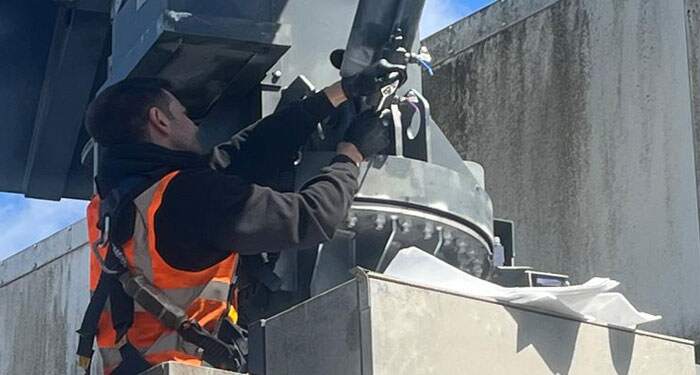
On-site hydraulic maintenance carried out on a Building Maintenance Unit serving a commercial building in Canary Wharf, London.
Building Maintenance Units, commonly known as BMUs, provide controlled access to the exterior of high-rise buildings for window cleaning, inspection and façade maintenance.
These specialist systems depend on hydraulic hoses, valves and associated components to control the movement and positioning of the equipment.
In this case study, Completely Hydraulic attended a site in Canary Wharf to carry out the replacement of hydraulic hoses and valves on a BMU, helping maintain the reliability of this critical building-access system.
For planned maintenance or urgent hydraulic repairs, our mobile hydraulic engineers support specialist equipment across London and the South East.
Not Sure Which Hydraulic Oil You Need?
Some machines require specialist or OEM-specific hydraulic oil. Using the wrong oil can cause serious damage.
Check Your Oil NowJob Overview
- Equipment: Building Maintenance Unit (BMU)
- Location: Canary Wharf, London
- Work Carried Out: Hydraulic hose and valve replacement
- Service Type: Planned on-site hydraulic maintenance
- Application: Commercial building access equipment
- Outcome: Replacement components installed and the hydraulic connections checked
Need a fast hydraulic repair quote?
Tell us what’s failed — we’ll get back to you quickly.
Get a Fast Quote →The Engineering Challenge
A Building Maintenance Unit is permanently installed on a commercial building and is designed to provide access to areas that cannot be reached safely using conventional equipment.
The hydraulic system may control functions such as:
- Boom movement and positioning
- Extension and retraction of operating sections
- Controlled movement of the access equipment
- Hydraulic locking and directional control
Because BMUs operate outdoors, their hydraulic components may be exposed to changing weather conditions, vibration, repeated articulation and normal age-related deterioration.
The work required safe access to the installed hydraulic components while ensuring that the replacement hoses and valves were correctly positioned within the existing machine structure.
Stage 1: Hydraulic System Inspection

Before beginning the replacement work, the engineer assessed the accessible hydraulic components and the surrounding installation.
The inspection focused on:
- Existing hydraulic hose condition
- Hose routing around the moving structure
- Hydraulic fittings and connection points
- Valve positioning and accessibility
- Clearance around adjacent mechanical components
This initial assessment was important because replacement hoses must not only match the required specification, but must also be routed correctly to avoid unnecessary strain, abrasion or twisting during operation.
Stage 2: Existing Hose & Valve Removal
The relevant hydraulic hoses and valve components were carefully disconnected from the BMU.
Working on specialist access equipment requires a controlled approach because the hydraulic components are often positioned within compact assemblies and close to moving structures.
During removal, attention was given to:
- Identifying the correct hose and valve connections
- Preventing contamination from entering the open hydraulic system
- Avoiding damage to surrounding components
- Maintaining the original routing reference for the replacement hoses
- Working safely within the available access area
The engineer was equipped with suitable fall-protection equipment while carrying out the work at height.
Stage 3: New Hydraulic Hoses & Valves Installed

The replacement hydraulic hoses and valves were installed directly onto the BMU.
The installation required careful attention to:
- Connection alignment – reducing unnecessary stress on the hose fittings
- Hose routing – allowing the components to move without rubbing against the surrounding structure
- Bend radius – avoiding excessively tight bends that could shorten hose life
- Component clearance – preventing contact with moving or fixed machine parts
- Secure installation – ensuring the replacement components remained correctly positioned
Correct installation is just as important as using the right hydraulic component. Poor routing or excessive strain can lead to premature hose failure even when the replacement hose itself is correctly specified.
Stage 4: Final Installation Checks
Once the replacement work had been completed, the new hydraulic connections were checked to confirm that the components had been installed correctly.
The final checks included:
- Confirming that the fittings were secure
- Checking the position of the replacement valves
- Inspecting the hydraulic connections for visible leakage
- Checking that the hoses were not twisted or under unnecessary tension
- Ensuring that the hose routing provided suitable clearance
The maintenance work was completed on the installed BMU without the need to remove the complete machine from its operating position.
Final Outcome
The required hydraulic hoses and valves were replaced successfully on site at Canary Wharf.
The completed work provided:
- New hydraulic hoses installed in the required positions
- Replacement hydraulic valves fitted to the existing system
- Secure and correctly aligned hydraulic connections
- Reduced risk associated with ageing hydraulic components
- A completed planned-maintenance task without removing the BMU
Replacing worn or ageing hydraulic components as part of a planned maintenance programme can help reduce the risk of leaks, unexpected failure and prolonged equipment downtime.
Why BMU Hydraulic Maintenance Matters
Building Maintenance Units are specialist pieces of access equipment. Their hydraulic systems must provide controlled and dependable movement whenever the equipment is required.
Hydraulic hose or valve deterioration can lead to:
- Hydraulic oil leakage
- Reduced or inconsistent movement
- Pressure loss within the hydraulic circuit
- Unexpected equipment downtime
- Damage to surrounding hydraulic components
- More extensive repair requirements if deterioration is ignored
Regular inspection and planned component replacement allow potential issues to be addressed before they develop into operational failures.
Quick Engineering Summary
Completely Hydraulic replaced hydraulic hoses and valves on a Building Maintenance Unit at Canary Wharf, London.
The work was completed directly on the installed equipment by a mobile hydraulic engineer. The existing components were removed, replacement hoses and valves were fitted, and the completed connections and hose routing were checked.
Service: BMU hydraulic hose and valve replacement
Location: Canary Wharf, London
Equipment: Building Maintenance Unit
Work Type: Planned on-site hydraulic maintenance
Why Completely Hydraulic?
Completely Hydraulic supports commercial, industrial and mobile equipment with practical hydraulic engineering services across London and the South East.
Our services include:
- Hydraulic hose replacement and repair
- Mobile hydraulic engineering
- Hydraulic valve replacement
- Hydraulic fault diagnosis
- Planned preventative maintenance
- Emergency hydraulic breakdown support
- Hydraulic cylinder and ram repair
From planned maintenance to emergency breakdowns, our engineers provide experienced support for specialist hydraulic machinery and equipment.
Keeping Machinery Moving.
Related Hydraulic Services & Guides
Need On-Site Hydraulic Maintenance?
If your equipment requires hydraulic hose replacement, valve maintenance or fault diagnosis, Completely Hydraulic can provide experienced on-site support.
BMU Hydraulic Maintenance – FAQ
What is a Building Maintenance Unit?
A Building Maintenance Unit, or BMU, is a permanently installed access system used for window cleaning, inspection and maintenance on the exterior of high-rise buildings.
Why do BMU hydraulic hoses need replacing?
Hydraulic hoses can deteriorate because of age, repeated movement, vibration, abrasion and exposure to outdoor conditions. Planned replacement helps reduce the risk of leakage or unexpected failure.
Can BMU hydraulic hoses be replaced on site?
Yes. When safe access and suitable isolation are available, many BMU hydraulic hoses and valves can be replaced directly on the installed equipment.
Why is correct hydraulic hose routing important?
Correct routing helps prevent twisting, rubbing, excessive bending and strain at the fittings. Poor routing can shorten the working life of a hydraulic hose.
Does Completely Hydraulic work on specialist access equipment?
Completely Hydraulic provides on-site hydraulic hose replacement, valve support and hydraulic maintenance for a wide range of commercial, industrial and specialist equipment.
Does Completely Hydraulic cover Canary Wharf and London?
Yes. Completely Hydraulic provides mobile hydraulic engineering and emergency breakdown support throughout London and surrounding areas.