

Hydraulic Cylinder Manufacturing Machinery: Inside the Completely Hydraulic Workshop
See how Completely Hydraulic uses large-capacity lathes, milling equipment and workshop machining capability to repair, rebuild and manufacture hydraulic cylinders and components.
Last Updated: 26 August 2026
Hydraulic cylinder repair and manufacture often require more than replacing seals.
Damaged rods, pistons, glands, pins, threads and other cylinder components may need to be machined, restored or manufactured before a cylinder can return to service.
Completely Hydraulic’s workshop capability includes the Colchester Alpha 1760XS CNC lathe, Colchester SP520VS turret mill and Colchester Mastiff lathe.
Together, these machines allow our engineers to work on a wide range of hydraulic cylinder components, including large and specialist parts that cannot always be sourced directly from an original manufacturer.
For cylinder repair and manufacturing support, see our hydraulic ram and cylinder repair service.
Not Sure Which Hydraulic Oil You Need?
Some machines require specialist or OEM-specific hydraulic oil. Using the wrong oil can cause serious damage.
Check Your Oil NowQuick Answer: What Machinery Is Used to Manufacture Hydraulic Cylinders?
Hydraulic cylinder manufacturing and repair can require lathes, milling machines and other precision workshop equipment.
Lathes are used for cylindrical components such as piston rods, pistons, glands and threaded parts, while milling machines are useful for flats, slots, mounting features and other machined geometry.
Completely Hydraulic uses a combination of CNC and manual machining equipment so damaged, obsolete or bespoke cylinder components can be assessed and manufactured where appropriate.
Need a fast hydraulic repair quote?
Tell us what’s failed — we’ll get back to you quickly.
Get a Fast Quote →Why Is Machining Important in Hydraulic Cylinder Repair?
A hydraulic cylinder contains a number of precision components that must fit and move correctly relative to one another.
During a repair, an engineer may find that components are:
- Worn
- Scored
- Bent
- Corroded
- Cracked
- Damaged at the threads
- No longer available from the OEM
- Uneconomical to source as a complete replacement
Machining gives the workshop the ability to restore or reproduce selected components rather than treating every damaged cylinder as a complete replacement.
Engineering Point
Cylinder repair is not simply seal replacement. If the rod, piston, gland, barrel or mounting components are damaged, machining capability can become an important part of the repair process.
How Does Workshop Machinery Support Cylinder Repair and Manufacture?
01 — INSPECT
The cylinder is assessed to identify damaged, worn or obsolete components.
02 — MEASURE
Critical component dimensions, threads, fits and mounting details are established.
03 — MACHINE
Required components are repaired or manufactured using suitable lathes and milling equipment.
04 — REBUILD
The cylinder is rebuilt using serviceable, repaired or newly manufactured components as appropriate.
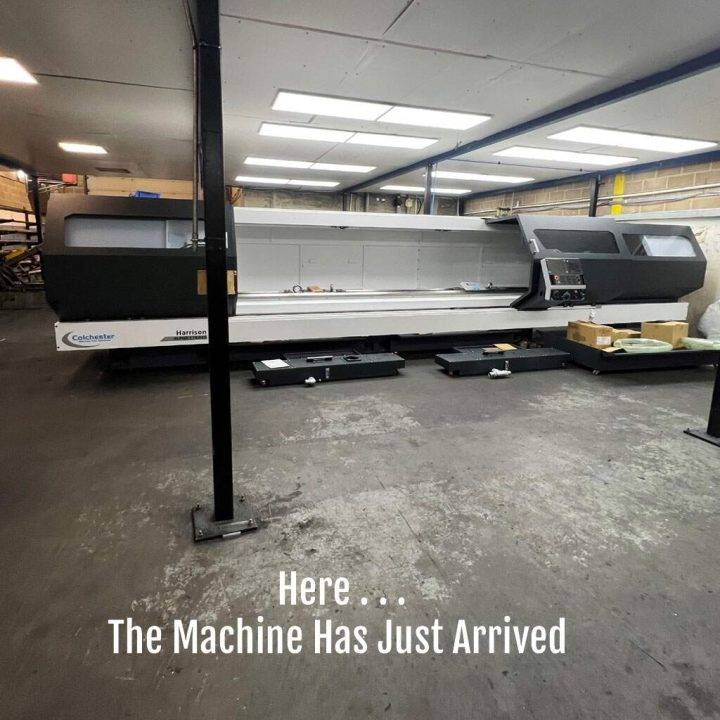
Colchester Alpha 1760XS CNC Lathe
The Colchester Alpha 1760XS is the largest-capacity lathe currently featured in Completely Hydraulic’s cylinder workshop.
The machine provides 6000 mm between centres, giving the workshop capacity to machine long hydraulic cylinder components and other substantial workpieces.
This is particularly useful when working on:
- Long piston rods
- Large hydraulic cylinder components
- Specialist shafts
- Long threaded components
- Bespoke cylindrical parts
- Components where conventional smaller workshop machines may not provide sufficient working length
Why the 6000 mm Capacity Matters
Long cylinder rods and shafts need sufficient machine length to be supported and machined correctly. A 6000 mm distance between centres significantly expands the range of long hydraulic components that can be handled within the workshop.
Why Use CNC Turning for Hydraulic Cylinder Components?
CNC turning allows programmed machining operations to be repeated consistently across cylindrical components.
Depending on the part, turning operations may include:
- Reducing outside diameters
- Producing shoulders
- Machining grooves
- Cutting threads
- Preparing seal or bearing locations
- Producing repeat components
CNC capability can be particularly useful where an accurately repeatable geometry is required or when several similar components need to be produced.
CNC Does Not Replace Engineering Judgement
The machine follows the programmed machining process, but component measurement, material choice, repair assessment and final specification still depend on experienced engineering decisions.
Colchester SP520VS Turret Mill
Not every hydraulic cylinder component is completely cylindrical.
The Colchester SP520VS turret mill gives the workshop the ability to machine features that require milling rather than turning.
Depending on the component, milling operations may be useful for:
- Flats
- Slots
- Keyways
- Mounting features
- Drilled or machined faces
- Special component geometry
This complements the turning capability of the lathes and gives the workshop a broader range of machining options for hydraulic repairs and bespoke manufacturing.


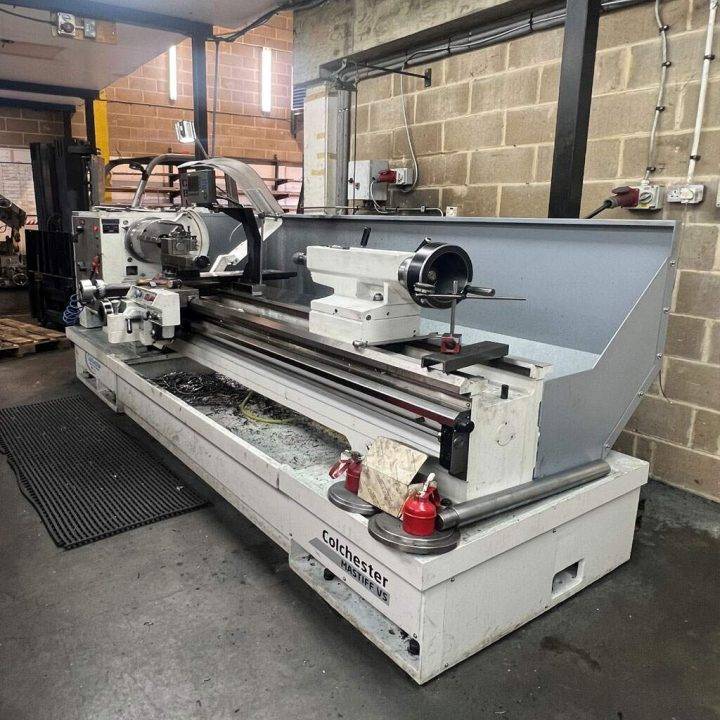
Colchester Mastiff Lathe
The Colchester Mastiff provides additional turning capacity within the workshop.
It can support machining work on a variety of hydraulic and mechanical components, allowing engineers to select the machine most appropriate for the size and type of part being produced or repaired.
Possible work can include:
- Pins
- Bushes
- Couplers
- Piston components
- Glands
- Shafts
- Threaded hydraulic components
Why Does a Hydraulic Cylinder Workshop Need More Than One Machine?
Hydraulic cylinders vary considerably in size, construction and component geometry.
A long piston rod may require the capacity of a large lathe, while a smaller gland or pin can be better suited to another machine.
A component requiring a flat, slot or mounting feature may need milling rather than turning.
The Machine Should Suit the Component
Using different lathes and milling equipment allows the workshop to choose machining capability according to component size, geometry and repair requirement rather than forcing every job through the same machine.
Which Hydraulic Cylinder Parts Can Require Machining?
Many individual cylinder components can require machining during repair or manufacture.
These may include:
- Piston rods
- Pistons
- Glands
- Bushes
- Pins
- Mounting components
- Threaded components
- End caps
- Specialist replacement parts
Whether a part is repaired, reused or manufactured depends on its condition, design and the economics of the repair.
Can Machining Help With Obsolete Hydraulic Cylinders?
Yes, in some cases.
Older machines may use hydraulic cylinders for which replacement components are no longer readily available.
If the original part can be measured and its required material and geometry established, workshop machining may provide a route to producing a replacement component.
This can be useful for:
- Older industrial machinery
- Special-purpose equipment
- Imported machines
- Low-volume hydraulic equipment
- OEM components with long lead times
Manufacture Is Not Always the Answer
A component first needs to be assessed. In some cases repair is economical; in others replacement or manufacture may be more practical. The cylinder’s condition and expected service life should be considered before machining begins.
Repair, Remanufacture or Make a New Component?
The workshop may have several possible routes when a hydraulic cylinder component is damaged.
| Option | When It May Be Considered |
|---|---|
| Reuse | The original component remains within acceptable condition for continued service. |
| Repair | Damage is localised and the component can be restored economically. |
| Manufacture Replacement | The component is badly damaged, obsolete or unavailable but can be reproduced appropriately. |
| Replace Cylinder | Overall cylinder condition or repair economics make a replacement assembly more practical. |
For a fuller explanation, see our guide to hydraulic cylinder repair vs replacement.
How Does Machining Support OEM Hydraulic Work?
Workshop machining is also useful beyond one-off breakdown repairs.
OEM and repeat-production requirements may involve:
- Repeat cylinder components
- Machined pins and bushes
- Replacement rods
- Special hydraulic parts
- Prototype or low-volume components
- Repeatable cylinder assemblies
Where the specification has been established, CNC machining can help support consistent repeat production.
What Is the Advantage of In-House Hydraulic Machining?
Having machining capability within the hydraulic engineering operation can reduce the need to send every damaged component to an unrelated external machine shop.
Potential practical advantages include:
- Direct communication between hydraulic engineers and machinists
- Ability to inspect the complete cylinder alongside the damaged component
- Faster decisions on whether a component should be repaired or replaced
- Machining based on the requirements of the actual cylinder assembly
- Support for bespoke and obsolete components
- Improved control of the repair workflow
Hydraulics and Machining Work Together
Machining capability is most useful when combined with knowledge of how the cylinder operates, how its components interact and what caused the original failure.
Hydraulic Cylinder Manufacturing & Repair at Completely Hydraulic
Completely Hydraulic combines hydraulic engineering with workshop machining to support damaged, obsolete and bespoke cylinders.
Our cylinder capability includes:
- Hydraulic ram and cylinder repair
- Seal replacement and rebuilding
- Rod machining and manufacture
- Piston and gland work
- Machined replacement components
- Large-cylinder machining
- Obsolete cylinder support
- Hydraulic cylinder manufacturing
- OEM hydraulic engineering support
Our workshop machinery includes the Colchester Alpha 1760XS, SP520VS turret mill and Colchester Mastiff.
Keeping Machinery Moving.
Quick Workshop Summary
ALPHA 1760XS
CNC lathe with 6000 mm between centres for long and substantial hydraulic components.
SP520VS
Turret milling capability for flats, slots, mounting features and other component geometry.
COLCHESTER MASTIFF
Additional turning capacity for a range of hydraulic and mechanical components.
WHY IT MATTERS
Damaged, obsolete or bespoke cylinder parts can sometimes be repaired or manufactured rather than relying solely on off-the-shelf replacement.
APPLICATIONS
Cylinder repair, component manufacture, specialist machining and OEM hydraulic support.
Related Hydraulic Cylinder & Manufacturing Guides
Need a Hydraulic Cylinder Repaired or Manufactured?
If you have a damaged, obsolete or specialist hydraulic cylinder, send us the cylinder details and photographs so our engineering team can assess the most practical repair or manufacturing route.
Hydraulic Cylinder Manufacturing Machinery FAQs
What machinery is used to make hydraulic cylinders?
Hydraulic cylinder manufacture can use lathes, CNC lathes, milling machines, drilling equipment and other workshop machinery depending on the component being produced.
What is a lathe used for in hydraulic cylinder repair?
A lathe is used to machine cylindrical components such as piston rods, pistons, glands, pins, bushes and threaded parts.
What is a milling machine used for in hydraulic cylinder manufacture?
A milling machine can produce flats, slots, keyways, mounting features and other shapes that cannot be produced by simple turning alone.
How large is Completely Hydraulic’s Alpha 1760XS lathe?
The Colchester Alpha 1760XS used by Completely Hydraulic provides 6000 mm between centres, allowing long hydraulic cylinder components and shafts to be machined in the workshop.
Can damaged hydraulic cylinder rods be manufactured?
In many cases, a damaged piston rod can be repaired or replaced with a newly machined component, depending on its dimensions, material requirements and cylinder design.
Can obsolete hydraulic cylinder parts be reproduced?
Sometimes. Where the original component can be measured and the appropriate specification established, workshop machining may allow a replacement part to be produced.
Why is CNC machining useful for hydraulic cylinders?
CNC machining allows programmed turning operations to be repeated accurately, which can be useful for complex geometry and repeat hydraulic components.
Does Completely Hydraulic manufacture hydraulic cylinders?
Yes. Completely Hydraulic provides hydraulic cylinder repair, rebuilding, component machining and manufacturing support for industrial, mobile and specialist applications.