Updated: 3 September 2026
A good hydraulic maintenance plan should reduce the likelihood of unexpected failures without creating unnecessary servicing, component replacement or downtime.
The key is to build the maintenance schedule around the actual machine, operating hours, workload, environment, manufacturer guidance, condition history and business risk — rather than applying the same daily, weekly or annual checklist to every hydraulic system.
Completely Hydraulic provides hydraulic preventative maintenance support for industrial, mobile and specialist hydraulic equipment.
Quick Answer
A hydraulic PPM plan should be based on the equipment manufacturer’s requirements, operating hours, duty cycle, environment, machine criticality and previous fault history. Typical maintenance areas include hydraulic oil, filtration, hoses, fittings, cylinders, pumps, valves, reservoirs, leaks, temperature and contamination. Inspection frequency should increase where operating conditions or failure consequences justify it.
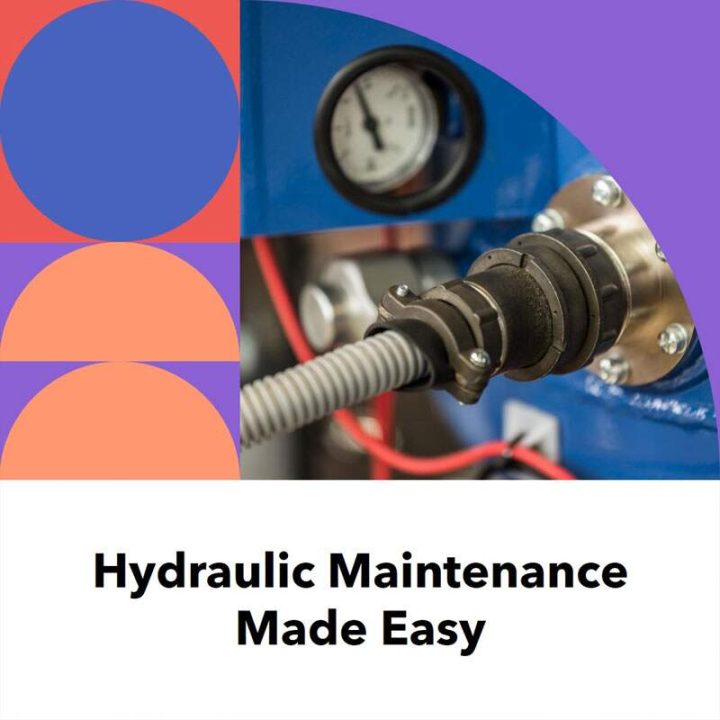
PPM stands for Planned Preventative Maintenance.
Instead of waiting for hydraulic equipment to fail, inspections and maintenance activities are planned in advance to help identify deterioration, contamination, leakage and other developing problems before they result in a breakdown.
A hydraulic PPM programme may include:
Engineering Point
Preventative maintenance does not mean replacing every component at a fixed interval. The objective is to inspect and maintain the system intelligently so that work is performed when manufacturer requirements, condition, service history or operating risk justify it.
Hydraulic systems frequently operate in demanding environments and under substantial mechanical loads.
Small problems can develop gradually before they become obvious to an operator.
Examples include:
Finding these conditions early can make it possible to plan repair work rather than responding only after the machine stops.
There is no single maintenance interval that is correct for every hydraulic machine.
| Factor | Why It Matters |
|---|---|
| OEM Requirements | Manufacturer maintenance instructions should form the starting point where available. |
| Operating Hours | Equipment operating continuously may require a different approach from machinery used occasionally. |
| Duty Cycle | Heavy or repetitive operation can increase wear and heat exposure. |
| Environment | Dust, mud, salt, water, heat, cold and vibration can all influence maintenance requirements. |
| Machine Criticality | Equipment where failure causes major production loss may justify closer inspection and condition monitoring. |
| Failure History | Repeated hose, pump, cylinder or contamination problems should influence future inspection priorities. |
| Fluid Condition | Oil cleanliness, condition and contamination trends may indicate additional maintenance is needed. |
Excavators, loaders, piling rigs and similar machinery often operate around dust, dirt, debris, vibration and changing weather.
Maintenance planning may therefore place particular emphasis on:
See our guide to hydraulic cylinder maintenance for construction equipment.
Fixed industrial systems may run for long periods and can depend on accurate hydraulic control.
Maintenance may therefore focus on:
Agricultural equipment may experience intense seasonal use followed by long periods of reduced operation.
Pre-season and post-season inspections can therefore be useful alongside manufacturer-prescribed servicing.
Salt, moisture and weather exposure can accelerate corrosion and deterioration.
Extra attention may be appropriate for:
Core Hydraulic Maintenance Areas
1. Hydraulic oil
Check the correct fluid level, condition and specification, and investigate unusual colour, contamination or aeration.
2. Filters
Inspect filter-condition indicators where fitted and replace elements according to system requirements and condition.
3. Hoses & fittings
Inspect for abrasion, cracking, leakage, twisting, poor routing, damaged fittings and abnormal movement.
4. Cylinders
Check rods, seals, mountings and external leakage, and look for evidence of corrosion, scoring, misalignment or side loading.
5. Pumps & valves
Look for changes in noise, temperature, leakage, machine performance and control behaviour.
6. Reservoir & breathers
Inspect fluid level, contamination risks, breather condition and visible reservoir issues.
7. Operating behaviour
Record abnormal heat, vibration, noise, slow movement, drift or other changes that may indicate a developing problem.
Hydraulic fluid is both the power-transmission medium and an important part of component lubrication and heat management.
Maintenance should consider:
The ISO VG number — such as ISO 32, ISO 46 or ISO 68 — describes nominal viscosity at 40°C. It does not by itself determine whether the oil is suitable for a particular machine.
Always prioritise the machine or component manufacturer’s requirements.
See our Hydraulic Oil ISO Grades Guide.
Some machines require specialist or OEM-specific hydraulic oil. Using the wrong oil can cause serious damage.
Check Your Oil NowFilters help protect hydraulic components by capturing selected contaminants circulating through the system.
The correct replacement interval depends on:
A filter should not simply be replaced because a generic calendar date has arrived if the manufacturer specifies a different service approach.
Likewise, a repeatedly blocked filter should not simply be changed again without considering where the contamination is coming from.
Read our Hydraulic Filter Replacement & Fluid Cleanliness Guide.
Hydraulic hoses should be inspected for deterioration before a leak or burst develops.
Look for:
Hydraulic Hose Safety
Never search for a pressurised hydraulic leak using your hand. High-pressure hydraulic fluid can penetrate the skin and cause a serious injection injury. Depressurise equipment safely and follow the machine manufacturer’s procedures before inspection or repair.
Where a pressure hose is damaged, the appropriate action is generally to replace the hose assembly rather than attempting to patch the pressure line.
See our Hydraulic Hose Inspection Checklist.
Cylinders should be inspected for more than external oil leakage.
Maintenance checks may include:
A seal failure can sometimes be the symptom rather than the root cause. Replacing seals without correcting a damaged rod, misalignment or contamination problem can allow the fault to return.
For repair support, see Hydraulic Ram & Cylinder Repair.
Changes in machine behaviour can provide useful early warning signs.
Examples include:
These symptoms do not identify one failed component by themselves.
Pump wear, valve problems, incorrect oil, contamination, aeration, cavitation, restrictions and internal leakage can create overlapping symptoms.
Diagnosis should therefore come before component replacement.
Not necessarily.
Some equipment manufacturers specify time-based or operating-hour service intervals, and these should be followed where applicable.
However, oil and filtration requirements may also be influenced by:
Changing oil too late can expose components to degraded or contaminated fluid. Changing serviceable oil unnecessarily can create avoidable cost and waste.
A condition-informed maintenance approach can therefore complement manufacturer servicing requirements.
| Maintenance Type | How It Works |
|---|---|
| Reactive | Repair is carried out after equipment has failed. |
| Preventative | Inspection and servicing are planned to reduce the likelihood of failure. |
| Condition-Based | Maintenance is triggered or adjusted according to the observed condition of the equipment or fluid. |
| Predictive | Trend data and condition monitoring are used to anticipate deterioration and help plan intervention. |
| Corrective | A known defect is corrected before it develops into a larger failure. |
A Practical PPM Planning Process
1. Identify the equipment
Record the hydraulic machines, major components and manufacturer information.
2. Establish OEM requirements
Use manufacturer servicing and inspection requirements as the baseline where available.
3. Assess operating conditions
Consider hours, loads, environment, temperature, contamination exposure and duty cycle.
4. Consider machine criticality
Prioritise equipment where failure would cause significant production loss, safety concerns or operational disruption.
5. Review maintenance history
Repeated failures can reveal areas that need closer inspection or engineering correction.
6. Create inspection tasks
Define what should be inspected, what condition is acceptable and what should trigger further action.
7. Review and improve the schedule
Use inspection results, breakdown history and machine changes to refine the maintenance plan over time.
A useful PPM programme should create a history of what has been observed and repaired.
Records may reveal patterns such as:
These trends can indicate that the real problem is related to machine design, routing, contamination, operating conditions or component specification rather than routine wear alone.
Jump the queue. Reduce downtime. Pay less for parts, labour and callouts.
✔ Priority response
✔ Lower rates day & night
✔ Trade discounts on parts
✔ 30-day credit terms (approved accounts)
Not always.
If the same component fails repeatedly, simply inspecting or replacing it more frequently may treat the symptom without correcting the cause.
For example:
Preventative Maintenance Should Also Prevent Repeat Failures
A strong PPM programme does more than schedule servicing. It uses maintenance information to identify recurring problems and determine whether a repair, routing change, contamination-control improvement or system modification is needed.
Closer or more frequent inspection may be appropriate when:
Conversely, extending maintenance intervals should be based on evidence, OEM requirements and machine condition rather than assumption.
Completely Hydraulic provides preventative maintenance support alongside its wider hydraulic engineering capabilities.
This can include support with:
Maintenance programmes can be aligned with the individual equipment, operational environment and business requirements rather than relying on a one-size-fits-all schedule.
Learn more about CH Hydraulic Preventative Maintenance.
Completely Hydraulic supports businesses through its trade-counter, workshop and mobile hydraulic engineering network.
Our four hydraulic trade counters are located in:
Birmingham and the wider West Midlands are supported through our mobile hydraulic engineering service.
For depot information, visit our Hydraulic Trade Counter Network.
The Bottom Line
The best hydraulic preventative maintenance plan is not simply the one with the most frequent servicing. It is the plan that matches the equipment, manufacturer requirements, operating conditions, machine criticality and real maintenance history — then adapts as those conditions change.
If you want to reduce unexpected hydraulic breakdowns and build a maintenance programme around your actual equipment, Completely Hydraulic can help assess the machinery and determine an appropriate inspection and maintenance approach.
PPM stands for Planned Preventative Maintenance. It involves scheduling hydraulic inspections and maintenance before equipment fails, with the aim of identifying deterioration and reducing unexpected breakdowns.
There is no universal interval. Maintenance frequency should be based on manufacturer requirements, operating hours, duty cycle, environment, machine condition, maintenance history and the consequences of failure.
Typical checks include hydraulic oil, filters, hoses, fittings, cylinders, pumps, valves, reservoirs, breathers, leaks, operating temperature and changes in machine behaviour.
Inspection frequency should reflect the application, manufacturer guidance, operating environment, hose condition and consequences of failure. Equipment exposed to abrasion, heat, movement or harsh conditions may require closer inspection.
Not necessarily. Follow the equipment manufacturer’s requirements and consider operating hours, fluid condition, contamination, oil analysis and service history. A universal annual oil-change rule is not appropriate for every hydraulic system.
Reactive maintenance takes place after a failure has occurred. Preventative maintenance plans inspections and servicing in advance to reduce the likelihood of unexpected failure.
Predictive maintenance uses condition information and trends to help anticipate deterioration. Depending on the equipment, this can include operating data, oil condition, temperature, vibration, inspection history or other measurable indicators.
Repeated failure can indicate an unresolved root cause such as contamination, poor hose routing, incorrect component specification, excessive heat, misalignment, cavitation or unsuitable operating conditions. Increasing maintenance frequency alone may not correct the problem.
A well-designed maintenance programme can help identify developing problems before they cause equipment failure, allowing some repairs to be planned rather than carried out after an unexpected breakdown.
Yes. Completely Hydraulic provides hydraulic preventative maintenance support alongside mobile engineering, workshop repairs, hose services, cylinder repairs, filtration and wider hydraulic engineering services.