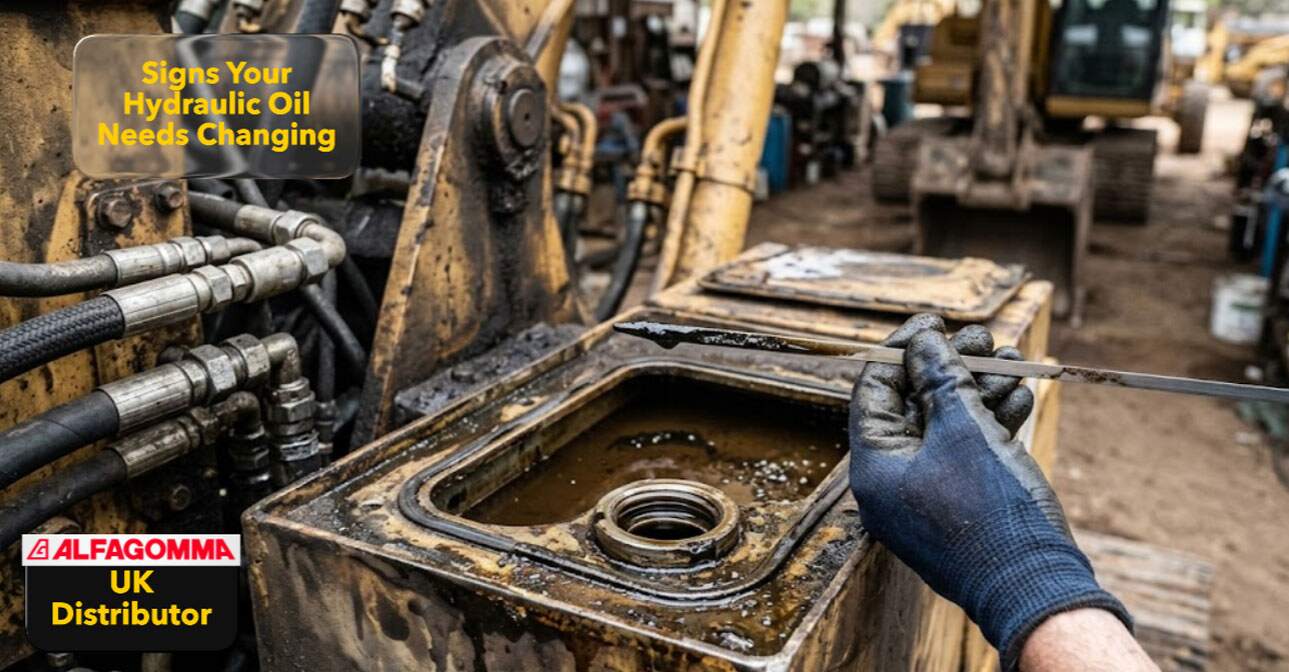
How to spot contaminated or worn hydraulic oil before it causes overheating, poor performance or component damage.
Hydraulic oil does far more than simply move fluid around a system. It helps transfer power, lubricate moving parts, control temperature and protect hydraulic components from wear. Over time, however, hydraulic oil can become contaminated, degraded or unsuitable for the way a machine is being used.
If hydraulic oil is left in poor condition for too long, it can lead to slow system response, overheating, noisy pumps, internal wear and expensive repairs. Knowing the warning signs early helps operators and maintenance teams act before problems become more serious.
If you are unsure which oil grade your machine should be using, try our
Hydraulic Oil Advisor tool
or see our page on
what hydraulic oil excavators use.
Some machines require specialist or OEM-specific hydraulic oil. Using the wrong oil can cause serious damage.
Check Your Oil NowHydraulic systems depend on clean, stable oil to operate correctly. When oil begins to break down or becomes contaminated, the entire system can be affected. Pumps, valves, cylinders and seals all rely on the correct fluid properties to work efficiently.
If the oil is no longer doing these jobs properly, the system can begin to show visible and audible warning signs.
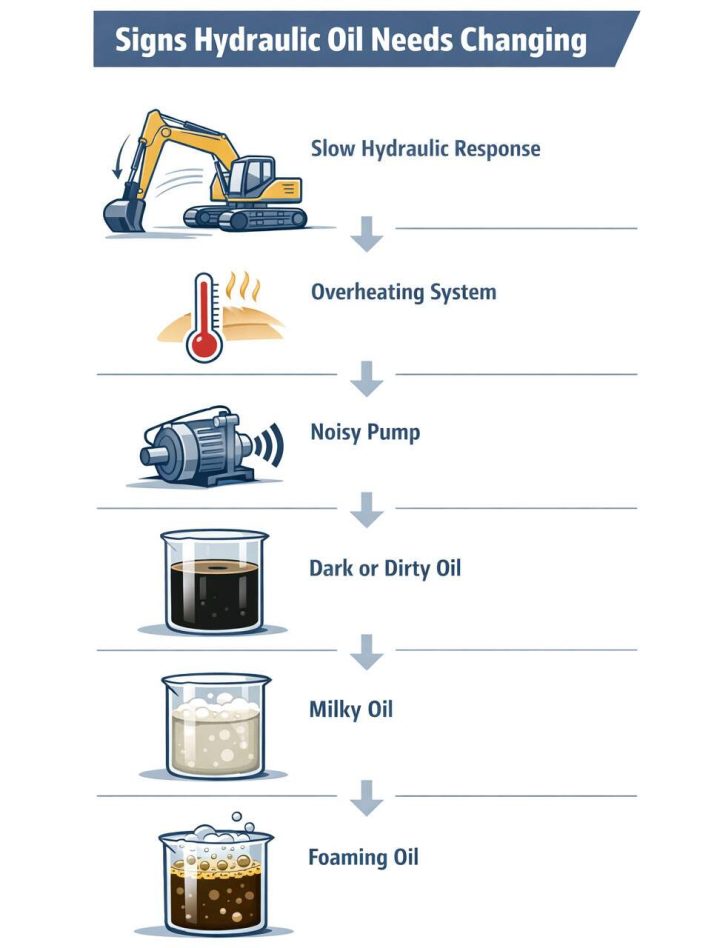
Below are some of the most common signs that hydraulic oil may need to be changed or checked more closely.
These warning signs do not always mean a full oil change is required immediately, but they do mean the hydraulic oil and system should be checked properly.
One of the biggest reasons hydraulic oil needs changing is contamination. Dirt, water, metal particles and degraded oil by-products can all affect performance and shorten the life of key components.
Common contamination sources include:
If oil contamination is suspected, it is often worth reviewing whether the system has the correct oil grade and whether a partial or full replacement is needed.
You can also read our guide on
mixing ISO 32 and ISO 46 hydraulic oil
if you are unsure whether different hydraulic oils have been combined.
Sometimes a machine shows symptoms that look like worn-out oil, but the real issue is that the oil grade is wrong for the machine or the weather conditions.
For example:
If you are comparing common grades used in plant machinery, see our page on choosing between ISO 46 and ISO 32 hydraulic oil.
We will also be covering this in more detail in our upcoming guide on hydraulic oil for cold weather vs hot weather.
A full or partial hydraulic oil change is often the right option when:
Where a hose burst or major leak has caused oil loss, the correct oil may also need to be supplied quickly to get machinery back into service.
For urgent top-ups, refill support and oil supply options, see our Emergency Hydraulic Oil Supply page.
Excavators, loaders and other plant machines often operate in dirty, demanding environments. That makes oil condition even more important. If a machine is losing performance or showing hydraulic symptoms, the oil should be part of the inspection process.
If you are checking machine size and refill quantities, also read:
Common signs include slow response, overheating, unusual pump noise, dark oil, milky oil and visible contamination.
Yes. Dirty or degraded oil can accelerate wear in pumps, valves, cylinders and seals.
Often, yes. Milky oil is commonly a sign of water contamination and should be investigated quickly.
Use the Hydraulic Oil Advisor tool or check the machine manual and service information.
Use our Oil Advisor tool or contact Completely Hydraulic for practical support with oil grades, maintenance and hydraulic oil supply.