

Tractor Hydraulic Cylinder Repair: Leaks, Bent Rods, Seals & Fault Diagnosis
A leaking, slow or drifting tractor hydraulic cylinder can interrupt work at exactly the wrong time. But replacing the seals — or even replacing the complete cylinder — should not be the automatic response. The cylinder, hydraulic circuit and operating conditions should first be assessed to establish what has actually failed.
Updated: 6 October 2026
Quick Answer: Can a Tractor Hydraulic Cylinder Be Repaired?
Many tractor hydraulic cylinders can be repaired or rebuilt if their main components remain serviceable. A repair may involve seals, rod work, gland or piston components, barrel work or replacement parts depending on the damage. Severe corrosion, a badly damaged barrel, bent or extensively damaged rod, damaged mountings, repeated failure or poor repair economics can make cylinder replacement more appropriate. Diagnosis should come before the repair decision.
Get Priority Hydraulic Support & Trade Pricing
Jump the queue. Reduce downtime. Pay less for parts, labour and callouts.
✔ Priority response
✔ Lower rates day & night
✔ Trade discounts on parts
✔ 30-day credit terms (approved accounts)
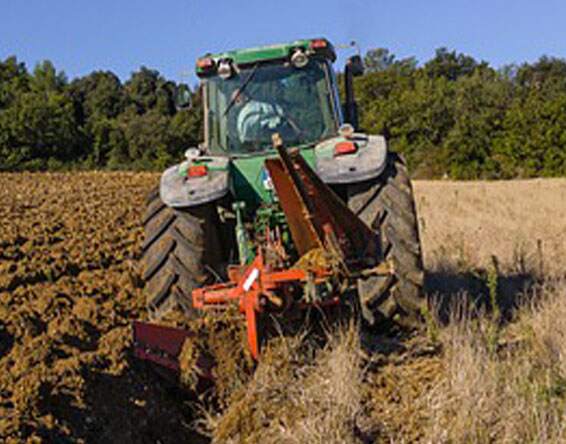
What Does a Hydraulic Cylinder Do on a Tractor?
Hydraulic cylinders convert hydraulic energy into linear force and movement. Depending on the tractor and attached equipment, cylinders may be used for functions such as lifting, lowering, positioning or operating agricultural implements.
A typical hydraulic cylinder can include:
- A cylinder barrel or tube
- Piston
- Piston rod
- Gland or head
- Rod and piston seals
- Wear components
- Hydraulic ports
- End caps
- Mounting points
Problems with any of these components can affect operation, but symptoms can also originate elsewhere in the tractor’s hydraulic circuit.
Signs a Tractor Hydraulic Cylinder May Need Attention
External Oil Leakage
Oil around the rod, gland, ports or connections can indicate seal, fitting, hose or component problems.
Cylinder Drift
An implement or load that will not maintain position can indicate internal leakage or a problem elsewhere in the hydraulic circuit.
Slow Movement
A cylinder moving more slowly than expected can result from several hydraulic faults and requires diagnosis.
Damaged Rod
Scoring, pitting, corrosion or bending can damage seals and affect cylinder operation.
Jerky Operation
Erratic movement can have several causes including mechanical, fluid, control or cylinder-related problems.
Repeat Seal Failure
Seals repeatedly failing can indicate an underlying rod, bore, alignment, contamination or operating problem.
Does a Slow Tractor Hydraulic Cylinder Mean the Cylinder Has Failed?
No. Slow hydraulic movement is a symptom, not a component diagnosis.
Possible causes can include:
- Internal cylinder leakage
- External hydraulic leakage
- Insufficient hydraulic flow
- Pump wear or another pump-related problem
- Valve or control problems
- Restricted filters or flow paths
- Incorrect or unsuitable hydraulic fluid
- Air entering the hydraulic system
- Contamination
- Mechanical binding or excessive load
Diagnose Before Replacing Parts
Replacing a cylinder because the tractor has become slow or weak can waste time and money if the real problem is a pump, valve, restriction, hydraulic fluid problem or another part of the circuit.
See our Hydraulic System Troubleshooting & Diagnostics Guide.
Why Does a Tractor Hydraulic Cylinder Drift?
A hydraulic cylinder or attached implement that gradually moves when it should remain stationary can indicate a load-holding problem.
Internal leakage across the cylinder piston is one possible cause, but it is not the only one.
Depending on the hydraulic circuit, possible causes can include:
- Internal cylinder leakage
- Control-valve leakage
- Load-holding valve problems
- External leakage
- Damaged seals or internal cylinder components
- Other circuit-related faults
Drift Does Not Automatically Mean the Cylinder Seals Have Failed
Before dismantling or replacing the cylinder, the hydraulic circuit should be considered. A valve problem can sometimes produce symptoms that appear to be cylinder failure.
Why Is My Tractor Hydraulic Cylinder Leaking?
An external leak around the rod or gland is often associated with seal problems, but simply fitting another seal kit may not provide a lasting repair.
The inspection should consider:
- Rod scoring or pitting
- Rod corrosion
- Bent rod
- Gland condition
- Bearing or wear component condition
- Seal condition
- Contamination
- Misalignment
- Side loading
- Operating conditions
A New Seal Cannot Repair a Damaged Rod
If a rod surface is scored, pitted or corroded, it can damage a new rod seal and cause the cylinder to leak again. The condition of the components that contact the seals needs to be assessed as part of the repair.
What Causes a Tractor Hydraulic Cylinder Rod to Bend?
A bent rod can indicate that the cylinder has experienced forces or conditions outside its intended operation.
Possible contributing factors can include:
- Mechanical overload
- Side loading
- Misalignment
- Impact
- Incorrect mounting geometry
- Excessive buckling load
- Damage elsewhere in the machinery or implement
Replacing a bent rod without considering why it bent can allow the same failure to occur again.
What Happens During a Tractor Hydraulic Cylinder Repair?
The exact repair process depends on the cylinder design and its condition. A professional workshop assessment can typically involve several stages.
| Stage | Purpose |
|---|---|
| 1. Initial Assessment | Review the reported fault and visible cylinder condition. |
| 2. Controlled Dismantling | Disassemble the cylinder appropriately so internal components can be examined. |
| 3. Component Inspection | Assess the rod, barrel, piston, gland, seals, threads, mountings and other relevant components. |
| 4. Repair Decision | Determine which components can remain in service and which require repair or replacement. |
| 5. Repair / Replacement | Carry out appropriate seal replacement, machining or component work required for the particular cylinder. |
| 6. Reassembly | Reassemble using suitable components and procedures. |
| 7. Appropriate Checks | Check the completed repair as appropriate to the cylinder and workshop procedure before return to service. |
Should a Tractor Hydraulic Cylinder Be Repaired or Replaced?
Many agricultural cylinders are repairable, but repair is not automatically the best option in every case.
Repair or rebuilding may be suitable where:
- The main cylinder structure remains serviceable
- Damage can be corrected reliably
- Suitable components are available or can be manufactured
- Repair provides a sensible balance of cost, reliability and downtime
Replacement may be considered where:
- The barrel or other major components are severely damaged
- Corrosion is extensive
- Mounting points are badly damaged
- The cylinder has suffered repeated failures
- Repair is technically unsuitable
- A suitable replacement provides a better commercial outcome
- Downtime makes replacement preferable
Our Hydraulic Ram Replacement Guide explains this decision in more detail.
Why Does the Same Tractor Cylinder Keep Failing?
A repeat cylinder failure is valuable diagnostic information.
If seals, rods or other components repeatedly fail, potential underlying causes can include:
- Contamination
- Misalignment
- Side loading
- Poor mounting condition
- Rod damage
- Pressure behaviour
- Mechanical overload
- Heat
- Incorrect repair specification
- Problems elsewhere in the machine
Do Not Treat Repeated Failure as Normal Wear
When the same cylinder repeatedly fails in the same way, replacing the failed part again without investigating the root cause can create another short-lived repair.
Hydraulic Oil & Contamination Matter
Hydraulic fluid condition can affect cylinders as well as pumps and valves.
Contamination can contribute to:
- Seal damage
- Surface wear
- Scoring
- Valve problems
- Accelerated component wear
Dirt, moisture and other contamination can be particularly relevant to agricultural machinery because equipment often operates in demanding outdoor environments.
Hydraulic fluid should meet the tractor or equipment manufacturer’s requirements. An ISO viscosity grade alone does not define the complete oil specification.
How Often Should Tractor Hydraulic Cylinders Be Inspected?
There is no universal once-a-year inspection interval that suits every tractor or agricultural application.
Inspection and maintenance should reflect:
- Manufacturer recommendations
- Operating hours and cycles
- Workload and duty
- Environment
- Equipment age and condition
- Previous failures
- Seasonal workload
- Consequences of breakdown
High-use equipment operating in dirty, wet or demanding conditions may justify more frequent checks than lightly used machinery.
A hydraulic preventative maintenance programme can help structure inspections around the actual equipment rather than relying on an arbitrary calendar interval.
Tractor Hydraulic Cylinder Safety
Tractors and agricultural implements can contain stored hydraulic and mechanical energy. Raised loaders, implements or attachments can fall if hydraulic pressure is lost or a component is disconnected.
Never work beneath hydraulically raised equipment unless it has been safely supported according to the manufacturer’s procedure.
Before removing a hydraulic cylinder, the machinery should be safely isolated and stored pressure controlled according to the equipment-specific procedure.
Never use your hand or fingers to search for a pressurised hydraulic leak. A fine jet of hydraulic fluid can penetrate the skin and cause a serious injection injury.
Suspected hydraulic injection injuries require urgent medical attention.
Tractor & Agricultural Hydraulic Support
Completely Hydraulic supports agricultural and mobile hydraulic equipment with cylinder, hose and wider hydraulic engineering services.
Assessment and repair of suitable tractor and agricultural hydraulic cylinders.
Replacement and custom cylinder solutions for suitable applications where required.
Mobile and workshop hydraulic hose support for suitable agricultural machinery.
Investigation of hydraulic faults where the failed component is not immediately obvious.
For broader agricultural support, see our Hydraulic Services for Agricultural Equipment.
Suitable cylinders can also be handled through our Free Hydraulic Cylinder Repair Collection Service.
Tractor Hydraulic Cylinder Repair FAQs
Can a tractor hydraulic cylinder be repaired?
Many tractor hydraulic cylinders can be repaired or rebuilt, depending on their design and the condition of the rod, barrel, gland, piston, seals and mountings.
Why is my tractor hydraulic cylinder leaking?
Possible causes include damaged seals, rod scoring or corrosion, gland wear, contamination, misalignment, side loading or other cylinder damage. The cause should be identified before simply replacing seals.
Why does my tractor hydraulic cylinder keep dropping?
Cylinder drift can be caused by internal cylinder leakage, but control valves, load-holding valves, external leakage and other circuit problems can create similar symptoms.
Why are my tractor hydraulics slow?
Slow operation can result from cylinder leakage, insufficient flow, pump problems, valve faults, restrictions, hydraulic fluid condition, contamination, air or mechanical loading. Diagnosis is needed to identify the cause.
Can you repair a bent tractor hydraulic cylinder rod?
Whether a damaged rod can be repaired depends on the degree and type of damage, material, dimensions, surface condition and application. Some rods require replacement.
Can I just replace the seals in a leaking tractor cylinder?
Only if the rest of the cylinder is in suitable condition. A damaged rod, bore, gland or alignment problem can quickly damage new seals.
Should I repair or replace my tractor hydraulic cylinder?
That depends on cylinder condition, repairability, replacement availability, downtime, cost, safety and reliability. Many cylinders can be rebuilt, while severely damaged units may be better replaced.
Why does the same hydraulic cylinder keep failing?
Repeated failure can indicate contamination, side loading, misalignment, pressure behaviour, rod damage, mounting problems or another root cause that has not been corrected.
How often should tractor hydraulic cylinders be inspected?
There is no single interval for every tractor. Inspection frequency should reflect manufacturer guidance, operating hours, workload, environment, equipment condition and failure consequences.
Can a tractor cylinder fail internally without leaking oil?
Yes. Internal leakage can affect force or load holding without producing a visible external oil leak, although other hydraulic components can produce similar symptoms.
Does Completely Hydraulic repair agricultural hydraulic cylinders?
Yes. Completely Hydraulic provides hydraulic cylinder, hose and wider hydraulic engineering support for suitable agricultural and mobile equipment applications.
Related Agricultural & Hydraulic Cylinder Guides
- Hydraulic Services for Agricultural Equipment
- Hydraulic Ram Repair UK
- Repair, Rebuild or Replace a Hydraulic Ram?
- 5 Signs a Hydraulic Cylinder Needs Refurbishment
- Hydraulic Ram Maintenance & Repair
- Hydraulic System Troubleshooting & Diagnostics
- Hydraulic Hose Failure Causes & Prevention
- Hydraulic Oil Analysis & Sampling
Problem With a Tractor Hydraulic Cylinder?
Whether the problem is a leaking cylinder, damaged rod, failed hose or an unidentified hydraulic fault, Completely Hydraulic can help assess the problem and determine the appropriate repair route.