Updated: 11 September 2026
A hydraulic leak is more than an oil stain.
Fluid loss can indicate a problem involving hoses, fittings, seals, cylinders, valves, pipework or other hydraulic components — and the safest repair starts by identifying where the leak is coming from and why it developed.
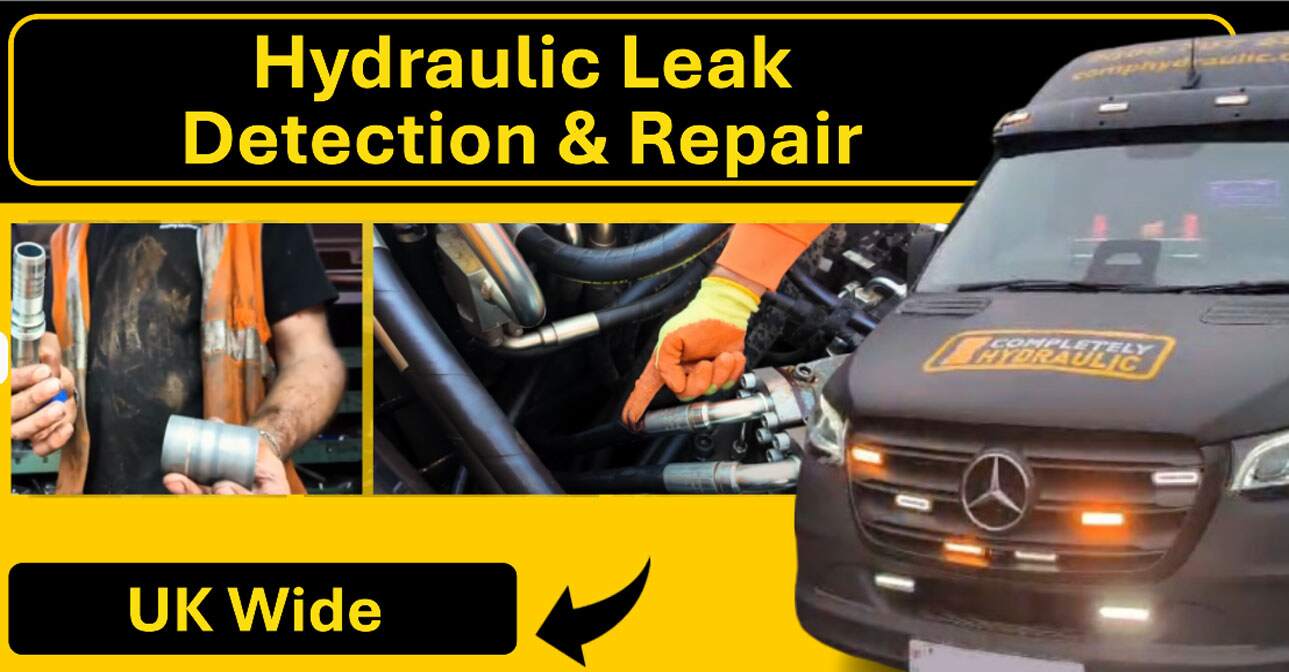
Completely Hydraulic provides mobile hydraulic leak diagnosis and repair for machinery and hydraulic systems across London, Essex, Kent, Heathrow and through mobile engineering support in Birmingham and the wider West Midlands.
Hydraulic leaks commonly come from damaged hoses, fittings, seals, cylinders, valves or pipework. The correct repair depends on finding the actual source and underlying cause. Never use your hand to search for a pressurised hydraulic leak because high-pressure fluid can penetrate the skin.
Hydraulic systems depend on retaining fluid within a controlled circuit.
A leak can lead to:
Some leaks are obvious. Others may only become visible when the machine moves, reaches operating temperature or develops pressure in a particular part of the circuit.
A pinhole hydraulic leak can eject fluid at high pressure and cause an injection injury. Do not touch, feel for or place your hand close to a suspected pressurised leak. Isolate the machine and remove stored hydraulic energy before inspection or repair.
Possible signs include:
Not every loss of performance is caused by an external leak, however. Internal leakage can also occur inside cylinders, valves and other components without oil appearing outside the system.
| Area | Possible Problem |
|---|---|
| Hydraulic hoses | Abrasion, cracking, damaged reinforcement, fitting problems, poor routing or age-related deterioration. |
| Hose fittings | Damaged sealing surfaces, incorrect assembly, vibration, loosening or incompatible components. |
| Hydraulic cylinders | Seal wear, rod damage, gland problems, side loading or internal leakage. |
| Valve blocks | Seal failure, damaged connections, component wear or internal leakage. |
| Pipework | Cracking, damaged joints, vibration, corrosion or poor support. |
| Reservoir and ancillary components | Damaged seals, connections, breathers, level indicators or associated pipework. |
An external leak allows hydraulic fluid to escape from the system.
Internal leakage is different. Fluid bypasses internally from one part of the hydraulic circuit to another without necessarily becoming visible outside the machine.
Internal leakage can occur in:
This can result in symptoms such as:
That is why finding no visible oil does not automatically mean there is no hydraulic leakage problem.
The diagnostic process depends on the machine and symptom.
Typical Leak Investigation
1. Understand the symptom
Establish when the leak occurs, how much fluid is being lost and whether machine performance has changed.
2. Make the system safe
Isolate the machine and control stored hydraulic energy before close inspection.
3. Inspect likely leak points
Check hoses, fittings, cylinders, valves, pipework and associated components.
4. Identify the failed component
Determine whether the leak is caused by a hose, seal, connection, damaged surface or another system fault.
5. Consider the root cause
Look for abrasion, vibration, contamination, misalignment, side loading, heat or incorrect installation where relevant.
6. Repair and check operation
Repair or replace the failed component and confirm that the system operates appropriately after the work.
Hose failures are among the most visible hydraulic leaks.
Possible causes include:
A damaged pressure hose should normally be replaced as a complete hose assembly rather than patched.
If the failed hose has been rubbing, twisting or bending too tightly, copying the old hose exactly may reproduce the same failure. Routing and movement should be checked before the replacement is fitted.
See Hydraulic Hose Failure Causes & Prevention.
Oil around a fitting does not automatically mean the fitting simply needs tightening.
The problem may involve:
Overtightening can also damage some connections, so the actual fitting type and fault should be identified before repair.
See Hydraulic Hose Fittings Explained.
A leaking hydraulic cylinder may need more than a new seal kit.
Possible causes include:
If the rod is damaged, fitting new seals without correcting the rod condition can lead to another leak.
See Hydraulic Ram & Cylinder Repair.
Yes.
Internal leakage can allow hydraulic fluid to bypass the piston or other internal sealing areas without appearing outside the cylinder.
Possible symptoms can include:
These symptoms can also have other causes, so the cylinder should be diagnosed within the wider hydraulic circuit.
Valves can leak externally through seals, joints or connections, but they can also leak internally.
Internal valve leakage may affect:
Not every incorrect machine movement is caused by a valve, however. Cylinder leakage, control faults or other hydraulic problems can create similar symptoms.
External pump leakage can result from seals, connections, housings or associated pipework.
Pump-related problems may also occur alongside:
Diagnosis should come before replacing the pump.
If the reservoir level repeatedly falls, there is normally a reason that should be investigated rather than continually topping up the system.
Possible causes include:
Repeatedly adding oil without finding the source can mask the underlying fault.
Yes. Operating with insufficient hydraulic fluid can contribute to:
The correct fluid specification should also be used when replenishing the system.
Some machines require specialist or OEM-specific hydraulic oil. Using the wrong oil can cause serious damage.
Check Your Oil NowA hydraulic leak can create two contamination problems at the same time.
Fluid escapes from the system, while damaged components or open connections may also create opportunities for dirt, water or other contamination to enter.
After significant failure, the wider system may need assessment to determine whether additional filtration, oil replacement or contamination-control work is appropriate.
That does not mean every leak requires a complete flush.
See Hydraulic Oil Change & Filtration.
Not automatically.
A system flush may be appropriate where contamination has entered the system or a failure has released debris, but the requirement depends on:
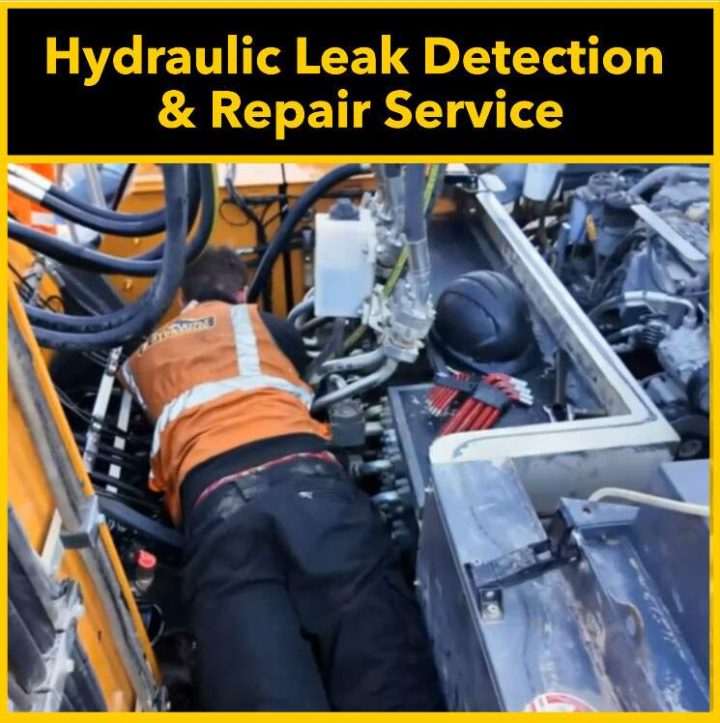
Many hydraulic leaks can be assessed on site, particularly where moving the machine would be difficult.
Mobile support can include:
The correct repair depends on what has failed and what can safely and practically be completed at the site.
See 24/7 Site Mobile Hydraulic Service.
Some faults cannot be properly repaired on the machine.
Workshop engineering may be more appropriate for:
See Hydraulic Repair Workshop.
If a hose fails suddenly:
Immediate Actions
✓ Stop the machine if it is safe to do so.
✓ Keep people away from escaping hydraulic fluid.
✓ Lower suspended loads where this can be done safely.
✓ Isolate the hydraulic system.
✓ Allow stored hydraulic pressure to dissipate according to the machine procedure.
✓ Contact a hydraulic engineer for repair.
See Hydraulic Hose Burst: Causes & Emergency Actions.
A repeated leak can be a sign that the visible failure is only the symptom.
Recurring faults may involve:
If the same hose, seal or connection repeatedly fails, the repair should look beyond the damaged component and investigate why the load, movement, heat or contamination is returning.
Not every hydraulic leak can be prevented, but suitable inspection and maintenance can help identify deterioration before some failures occur.
Useful checks include:
Inspection frequency should reflect the machine, environment, duty cycle, OEM guidance and consequences of failure.
Hydraulic systems can produce similar symptoms from different faults.
For example, reduced lifting performance could involve:
Replacing the most obvious component without diagnosis can therefore fail to correct the problem.
See Hydraulic System Troubleshooting & Diagnostics.
Completely Hydraulic operates from four engineering and trade-counter locations:
Birmingham and the wider West Midlands are supported through mobile hydraulic engineering.
CH supports hydraulic equipment in applications including:
Jump the queue. Reduce downtime. Pay less for parts, labour and callouts.
✔ Priority response
✔ Lower rates day & night
✔ Trade discounts on parts
✔ 30-day credit terms (approved accounts)
CH can combine mobile fault finding with wider hydraulic engineering capability.
Depending on the failure, support can include:
This matters because the visible leak is not always the complete fault.
Hydraulic leak repair should do more than stop visible oil loss. The source of the leak, condition of the failed component and possible root cause should be considered so the system can be returned to reliable operation without simply reproducing the same failure.
If your machine is losing hydraulic oil, has a damaged hose, leaking cylinder or an unidentified hydraulic fault, send CH the machine details, location and photographs where possible.
The system should first be made safe before hoses, fittings, cylinders, valves and pipework are inspected. The diagnostic method depends on the machine and whether the suspected leak is external or internal.
No. High-pressure hydraulic fluid can penetrate the skin and cause a serious injection injury. Never use your hand or fingers to search for a leak in a pressurised hydraulic system.
Possible causes include leaking hoses, fittings, cylinders, valves, pumps, pipework or reservoir components. The source should be identified rather than repeatedly topping up the reservoir.
Yes. Internal leakage can allow fluid to bypass seals without appearing outside the cylinder and can result in drift, slow operation or reduced force.
Yes. Internal valve leakage can affect actuator holding, system performance, pressure control and heat generation.
A damaged pressure hose should normally be replaced as a complete correctly specified assembly rather than patched.
Repeated hose failure may indicate problems such as abrasion, poor routing, twisting, excessive bend, heat, machine movement or unsuitable hose specification.
No. Flushing depends on whether contamination has entered the system, the nature of the failure and the cleanliness requirements of the hydraulic equipment.
Many hose, fitting and other hydraulic faults can be assessed and repaired on site where conditions allow. More complex cylinder, pump or component work may require workshop engineering.
Yes. CH provides 24/7 mobile hydraulic engineering support for urgent hydraulic breakdowns, subject to the fault, site and repair requirement.