Updated: 11 September 2026
Hydraulic fittings connect hoses, tubes, pipes and components throughout a hydraulic system.
The correct fitting must match the thread, sealing method, size, pressure requirement, hose or tube type and application. A fitting that appears to screw together is not necessarily a safe or compatible hydraulic connection.
Completely Hydraulic supplies hydraulic fittings, adapters and hose assemblies through its trade counters and mobile hydraulic engineering service across London, Essex, Kent, Heathrow and surrounding areas.
Hydraulic fittings should be identified by their thread, size, sealing method and application — not by appearance alone. Common systems include BSP, JIC, metric, ORFS, NPT and flange connections, but the correct fitting depends on the actual component and hydraulic circuit.
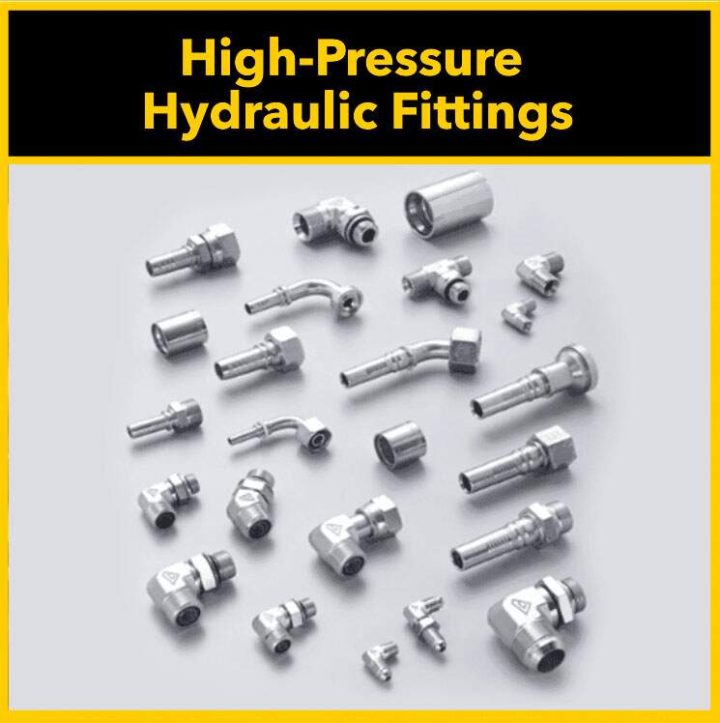
Hydraulic fittings create connections between components in a pressurised fluid-power system.
They may connect:
Depending on the connection, sealing may take place on threads, cones, O-rings, faces, bonded seals or other engineered sealing surfaces.
| Fitting Type | General Description |
|---|---|
| BSP | Common in UK and European hydraulic equipment, with parallel and tapered thread forms used in different connection styles. |
| JIC | Common flare-type hydraulic connection using a metal-to-metal sealing surface. |
| Metric | Used extensively on European machinery and available in several sealing and connection arrangements. |
| ORFS | O-ring face seal connections use an O-ring on the flat sealing face. |
| NPT | Tapered thread system commonly found on some imported and North American equipment. |
| Flange | Used on many higher-flow or larger hydraulic connections where a flange arrangement is appropriate. |
See Hydraulic Fittings & Adapters UK & Europe.
Many hydraulic fittings can look similar while using completely different threads or sealing methods.
Incorrect identification can cause:
Two hydraulic fittings can look almost identical but have different thread forms, pitches, seat angles or sealing methods. The connection should be measured and identified correctly before a replacement is selected.
Identification can involve checking:
Thread gauges, callipers and reference information may be used to help confirm the fitting type.
See Glossary of Hydraulic Fittings.
BSP fittings are widely used across UK hydraulic machinery, but not every BSP connection seals in the same way.
Depending on the fitting, sealing may involve:
Thread form alone therefore does not tell you everything needed to select the correct connection.
JIC fittings use a flare connection where sealing takes place at the mating cone surfaces rather than by simply tightening the threads.
Problems can occur if:
If a JIC connection leaks repeatedly, the sealing surfaces and installation should be inspected rather than repeatedly tightened.
Metric hydraulic fittings are common on European machinery and equipment.
They can use different:
This is another reason accurate identification matters before parts are ordered or installed.
ORFS stands for O-Ring Face Seal.
The connection seals using an O-ring against a machined face.
Leakage may result from:
Replacing an O-ring without checking the sealing face may not resolve the problem.
NPT uses a tapered thread and may appear similar to other tapered hydraulic threads.
It should not be assumed that two tapered fittings are interchangeable simply because they start to engage.
Forcing incompatible threads together can damage both components.
Flange connections are used in many larger or higher-flow hydraulic circuits.
Correct installation requires attention to:
Flanges should not be used to pull poorly aligned pipework or components into position.
Adapters allow different connection types or sizes to be joined where the hydraulic design permits it.
Examples can include:
Adding adapters can solve compatibility and routing problems, but unnecessary connections can also increase potential leak points.
See Hydraulic Fittings & Adapters Guide.
The hose fitting is part of a complete engineered hose assembly.
It must be compatible with:
Hydraulic hose, fittings and crimp specifications are designed as a system. Components from different manufacturers or product series should not be assumed compatible unless the combination is approved and validated for that application.
See Hydraulic Hose Fittings Explained.
Not necessarily.
The working capability of a hydraulic connection depends on the complete assembly and system, not just one individual fitting.
The limiting component may be:
The correct approach is to specify all components for the application rather than simply choosing the highest pressure rating available.
A hydraulic fitting leak can have several causes.
| Possible Cause | What May Be Happening |
|---|---|
| Damaged seal | O-ring, bonded seal or another sealing element may be damaged or unsuitable. |
| Damaged sealing surface | Cone, face or flare may be scratched, distorted or contaminated. |
| Wrong fitting type | Similar-looking but incompatible threads or seats may have been joined. |
| Misalignment | Pipework or hose may be applying side load to the connection. |
| Vibration | Repeated movement can contribute to loosening, fatigue or damage. |
| Incorrect tightening | Both under-tightening and excessive tightening can create problems depending on the connection. |
Not automatically.
A leaking connection can be caused by a damaged seal or sealing surface rather than a loose fitting.
Repeated tightening can:
The connection type and cause of leakage should be identified first.
Correct installation depends on the fitting system and manufacturer’s requirements.
Good practice can include:
A correctly specified fitting can still fail prematurely if the hose installation places excessive load on it.
Problems can result from:
See Hydraulic Hose Routing Guide.
Adapters are useful and often necessary, but they should not automatically be added when a more suitable hose-end configuration can provide a cleaner installation.
The best arrangement should consider:
When a hydraulic hose fails, the complete assembly should be assessed.
This includes:
A damaged hose fitting should not simply be transferred to another hose unless it is specifically designed and approved for reuse within that system.
Hydraulic fittings can operate in systems containing significant stored energy.
Never use your hand to check whether a hydraulic fitting or hose is leaking. A fine jet of high-pressure oil can penetrate the skin. Isolate the system and remove stored hydraulic pressure before working on the connection.
CH mobile engineers can support hydraulic fitting and hose-related breakdowns on site where practical.
Mobile work can include:
See 24/7 Site Mobile Hydraulic Service.
If a failed hose can be safely removed from the machine, customers can also bring hydraulic hose assemblies to a CH trade counter.
The old assembly can help with:
However, damage or incorrect previous specification should still be considered before duplicating it.
See While-You-Wait Hydraulic Hose Repairs.
Completely Hydraulic operates four trade-counter and engineering locations:
Birmingham and the wider West Midlands are supported through mobile hydraulic engineering.
CH is also an official Alfagomma distributor, supporting hydraulic hose and fitting requirements across a wide range of applications.
Jump the queue. Reduce downtime. Pay less for parts, labour and callouts.
✔ Priority response
✔ Lower rates day & night
✔ Trade discounts on parts
✔ 30-day credit terms (approved accounts)
Depending on the application, CH can support:
Useful Information to Provide
✓ Clear photographs of the fitting
✓ Machine make and model if known
✓ Hose size or identification
✓ Thread measurements if available
✓ Any part numbers or markings
✓ Details of the mating component
✓ Information about the hydraulic application
A hydraulic fitting is not just a threaded connector. Thread form, sealing method, size, material, pressure capability and compatibility with the wider hydraulic system all matter. Correct identification and installation are essential for a reliable connection.
Send CH photographs and any available measurements or component details. The team can help identify the connection and determine the appropriate fitting, adapter or hose assembly.
Common connection systems include BSP, JIC, metric, ORFS, NPT and flange fittings, although the correct type depends on the equipment and application.
Identification can involve thread diameter, pitch, parallel or tapered form, seat angle, sealing method and the size of the connected hose, tube or component.
They should not be assumed interchangeable. They use different thread standards and forcing incompatible connections together can damage the threads and create an unreliable seal.
Possible causes include damaged seals, worn sealing surfaces, incorrect fittings, misalignment, vibration, contamination or incorrect assembly.
Not automatically. The leak may be caused by a damaged seal or sealing surface, and excessive tightening can damage the connection.
It depends on the fitting type, condition and manufacturer’s requirements. Some components are designed for reuse while others should not be reused after removal or damage.
They should not be assumed compatible. Hose, fittings and crimp specifications are designed as a system and the combination should be approved for the application.
Not by itself. The complete hose assembly is limited by the specification and compatibility of all its components.
Yes, many hose and fitting-related faults can be supported through CH mobile hydraulic engineering where site conditions and the repair requirement allow.
Yes. CH operates trade counters in Harlow, Dagenham, Belvedere and Hayes where hydraulic hose and fitting requirements can be assessed.