
Food Manufacturing & Hydraulic Engineering
Hydraulics in Food Processing: Stainless Steel Cylinders, Hygiene & Equipment Reliability
Hydraulic systems provide the force and controlled movement required by many food manufacturing operations. Choosing suitable cylinder materials, hydraulic fluids and contamination-control measures is essential for protecting production reliability and food safety.
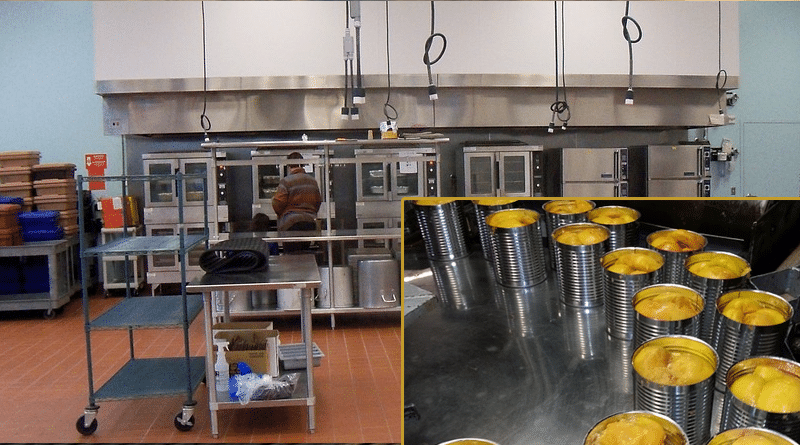
Quick Answer: How Are Hydraulics Used in Food Processing?
Hydraulic systems are used in food processing machinery to provide controlled force for pressing, cutting, lifting, mixing, packaging and material handling. Stainless steel hydraulic cylinders are often selected for demanding washdown environments because of their corrosion resistance and suitability for hygienic equipment designs.
Food manufacturing applications also require appropriate hydraulic fluids, compatible seals, contamination controls and maintenance procedures based on the equipment’s operating environment and food safety risks.
The Role of Hydraulics in Food Manufacturing
Food processing facilities depend on reliable machinery to maintain production schedules, product quality and hygiene standards.
Hydraulic systems are particularly useful in applications requiring substantial mechanical force within relatively compact equipment.
However, the food industry presents challenges that are different from many other manufacturing environments.
Frequent cleaning, moisture, chemical exposure and strict contamination-control requirements can influence the design and maintenance of hydraulic components.
A hydraulic cylinder suitable for construction machinery may not be suitable for installation above an open food production line.
Equipment selection must account for both mechanical performance and the hygiene requirements of the production environment.
8 Applications of Hydraulics in Food Processing
Hydraulics can support numerous food manufacturing and associated handling operations, depending on the machinery design.
1. Food Pressing Equipment
Provides controlled compression for suitable pressing, forming and extraction applications.
2. Industrial Cutting Machinery
Operates cutting and processing mechanisms where substantial controlled force is required.
3. Mixing Equipment
Supports selected mixing drives, vessel positioning and heavy lid-opening mechanisms.
4. Packaging Machinery
Provides force for selected packaging, forming and compression operations.
5. Lifting & Handling Systems
Moves ingredient containers, processing vessels, pallets and heavy production equipment.
6. Tipping Equipment
Controls the movement and discharge of suitable bins, containers and processing vessels.
7. Loading & Distribution
Operates dock levellers, loading platforms and associated warehouse handling equipment.
8. Food Waste Handling
Supports compactors, balers and waste-handling machinery operating within suitable facility areas.
Why Stainless Steel Hydraulic Cylinders Are Used in Food Processing

Stainless steel is widely used in food manufacturing equipment because suitable grades offer corrosion resistance, durability and surfaces that can be cleaned effectively.
Hydraulic cylinders operating in washdown environments may be exposed to water, detergents, disinfectants, moisture and temperature variations.
Conventional painted mild steel components can deteriorate when coatings become damaged or are exposed to unsuitable cleaning chemicals.
A correctly specified stainless steel cylinder may provide advantages in these environments, although stainless steel alone does not guarantee hygienic design or food-contact suitability.
Key Advantages of Suitable Stainless Steel Cylinders
- Improved corrosion resistance in compatible environments.
- Reduced dependence on protective paint coatings.
- Surfaces suitable for appropriately designed cleaning procedures.
- Potentially improved durability under repeated washdown conditions.
- Compatibility with selected hygienic equipment designs.
- Reduced risk of corrosion-related surface deterioration.
304 vs 316 Stainless Steel Hydraulic Components
Different stainless steel grades offer different corrosion-resistance and mechanical properties.
Grade 304 and grade 316 stainless steels are commonly encountered in food manufacturing equipment.
| Feature | 304 Stainless Steel | 316 Stainless Steel |
|---|---|---|
| Main alloying elements | Chromium and nickel | Chromium, nickel and molybdenum |
| Corrosion resistance | Suitable for many general environments | Generally improved resistance to chloride-related pitting |
| Washdown applications | Suitable where chemical exposure permits | Often preferred for more demanding environments |
| Material cost | Generally lower | Generally higher |
Engineering note: Neither grade is completely immune to corrosion. Material selection must account for cleaning chemicals, chloride concentrations, temperature, surface finish, mechanical loads and component design.
Engineering Insight: Why Stainless Steel Resists Corrosion
The corrosion resistance of stainless steel is associated with the chromium-rich passive oxide layer that forms on its surface.
This thin protective layer helps limit further oxidation under suitable environmental conditions.
Molybdenum, present in grades such as 316, can improve resistance to localised corrosion, including pitting in chloride-containing environments.
Material Engineering
Chromium
Supports formation of the protective passive surface layer.
Nickel
Contributes to the structure and properties of austenitic stainless steels.
Molybdenum
Improves resistance to certain forms of localised corrosion.
The suitability of a hydraulic cylinder depends on the complete component specification, not simply the stainless steel grade.
Hygienic Design of Hydraulic Equipment
Material selection is only one part of designing hydraulic equipment for food processing.
Even stainless steel components can retain contamination if they contain inaccessible cavities, damaged surfaces or poorly designed joints.
Smooth Surface Finishes
Appropriate surface finishes can make cleaning more effective and reduce locations where residues accumulate.
Reduced Crevices
Minimising inaccessible gaps and cavities helps reduce contamination retention.
Effective Drainage
Equipment should be designed and positioned to avoid unnecessary accumulation of cleaning fluids and moisture.
Compatible Sealing Materials
Seals must withstand relevant hydraulic fluids, temperatures and external cleaning conditions.
Cleaning Accessibility
Components should be accessible for inspection and appropriate cleaning procedures.
Contamination Protection
Equipment placement, barriers and containment measures can help reduce exposure of food products to hydraulic fluid.
Hygienic equipment design should be assessed as part of the complete production system and its intended cleaning procedures.
Food-Grade Hydraulic Oil: What Does H1 Mean?
Hydraulic fluid selection is particularly important when machinery operates close to food products, ingredients or food-contact surfaces.
NSF lubricant registration categories are commonly used to distinguish lubricants according to their intended application and potential food-contact conditions.
| Classification | Intended Application |
|---|---|
| NSF H1 | Lubricants intended for applications where incidental food contact may occur. |
| NSF H2 | Lubricants intended for locations where there is no possibility of food contact. |
| ISO 21469 | A standard addressing hygiene requirements for lubricants with incidental product contact. |
Does H1 Mean Hydraulic Oil Is Safe to Consume?
No. H1 registration relates to incidental food-contact applications under specified conditions. It does not authorise intentional contamination of food or remove the need for leak prevention, food safety controls and contamination assessment.
Hydraulic fluid must also meet the equipment manufacturer’s requirements for viscosity, lubrication performance, seal compatibility and operating temperature.
Changing from conventional hydraulic oil to an H1-registered fluid may require an approved conversion and flushing procedure.
Never assume that all food-grade hydraulic fluids are interchangeable.
Further information about lubricant registration is available from NSF.
Choosing Hydraulic Oil Viscosity for Food Machinery
Food-grade lubricants are available in different viscosity grades. Hydraulic oil selection must account for the equipment’s operating requirements.
| ISO Viscosity Grade | Nominal Kinematic Viscosity at 40°C |
|---|---|
| ISO VG 32 | 32 mm²/s |
| ISO VG 46 | 46 mm²/s |
| ISO VG 68 | 68 mm²/s |
Important: Viscosity grade does not establish food-contact suitability. Both the hydraulic performance specification and the appropriate lubricant registration or approval must be checked.
Hydraulic Seals and Hoses in Food Processing Machinery
Hydraulic seals and hose assemblies are essential to containing fluid and maintaining reliable system performance.
In food processing environments, they may also be exposed to cleaning chemicals, moisture and repeated temperature changes.
Selection should account for:
- Hydraulic fluid compatibility.
- Cleaning chemical exposure.
- Operating temperature and pressure.
- Movement and mechanical loading.
- Potential food-contact conditions.
- Relevant supplier declarations and material documentation.
- Resistance to wear and environmental deterioration.
NBR, FKM, EPDM, polyurethane and PTFE materials have different properties. Suitability depends on the particular compound, hydraulic fluid and cleaning regime.
A hose assembly carrying H1-registered hydraulic oil is not automatically a certified food-contact hose.
Read our guide to hydraulic seals, materials and common failures.
Common Hydraulic Failures in Food Processing Equipment
Cylinder Corrosion
Moisture, chemical exposure and damaged coatings can contribute to corrosion of unsuitable components.
Seal Deterioration
Wear, chemical incompatibility and excessive temperatures can damage hydraulic seals.
Hydraulic Fluid Leakage
Damaged hoses, fittings and seals may release fluid into equipment or surrounding areas.
Water Ingress
Washdown exposure, condensation and damaged seals may introduce moisture into hydraulic systems.
Particulate Contamination
Wear particles and external contaminants can damage pumps, valves and cylinders.
Hose Deterioration
Chemical exposure, abrasion, fatigue and incorrect routing can reduce hose reliability.
What Should a Food Factory Do After a Hydraulic Oil Leak?
A hydraulic leak near a food production area presents both an engineering problem and a potential food safety issue.
- Stop and safely isolate the affected equipment as appropriate.
- Notify the responsible engineering and food safety personnel.
- Identify and contain potentially affected products and production areas.
- Follow the site’s contamination incident and product-hold procedures.
- Arrange assessment and repair by competent personnel.
- Complete the required cleaning, inspection and verification procedures.
- Resume production only after appropriate technical and food safety approval.
Important: The use of H1-registered hydraulic fluid does not eliminate the need to investigate potential product contamination.
Hydraulic Filtration and Fluid Cleanliness
Contamination within hydraulic systems can accelerate wear and reduce the reliability of food processing equipment.
Particulate filters help remove solid contaminants, while suitable fluid-conditioning arrangements may be required to manage water and other contamination problems.
Standard hydraulic particulate filters should not be assumed to remove dissolved water or every form of contamination.
Effective hydraulic contamination control may include:
- Correctly specified hydraulic filters.
- Clean fluid transfer and storage procedures.
- Routine inspection of reservoir breathers.
- Fluid sampling and condition analysis.
- Investigation of water ingress.
- Controlled maintenance and component replacement.
Learn more in our guide to hydraulic filters for machinery.
Food Processing Hydraulic Maintenance Checklist
Planned maintenance helps food manufacturers protect equipment reliability while supporting their contamination-control procedures.
- Inspect hydraulic cylinders for leakage and corrosion.
- Check hose assemblies for wear, cracking and damage.
- Inspect piston rods and exposed sealing surfaces.
- Verify hydraulic lubricant specifications and registration status.
- Check compatibility with the site’s cleaning chemicals.
- Monitor fluid levels, temperature and cleanliness.
- Replace filters according to manufacturer requirements.
- Investigate evidence of water ingress.
- Use appropriate contamination controls during engineering work.
- Record component replacements and hydraulic repairs.
- Coordinate maintenance with food safety and production teams.
- Complete required checks before releasing equipment back into production.
Maintenance intervals should reflect the machine’s operating hours, cleaning frequency, environmental conditions and manufacturer guidance.
Commercial Insight
The True Cost of Hydraulic Failure in Food Manufacturing
The financial consequences of a hydraulic breakdown can extend beyond the cost of replacing a damaged component.
Food manufacturers may also experience production losses, additional cleaning requirements, product holds and delayed deliveries.
For illustration, consider a production line with estimated downtime costs of £500 per hour.
2 Hours
£1,000
4 Hours
£2,000
8 Hours
£4,000
Illustrative calculation only, not an industry average. Actual costs vary according to production capacity, staffing, equipment and product value. The example excludes repair costs and potential product losses.
Planned maintenance and correctly specified hydraulic components can help reduce avoidable production interruptions.
Food Safety Standards and Hydraulic Equipment in the UK
Food manufacturers must consider applicable food hygiene legislation, machinery safety requirements and their own food safety management arrangements.
The following frameworks may be relevant when assessing hydraulic machinery in food production environments.
| Framework | Relevance |
|---|---|
| HACCP | Identification and control of food safety hazards, including potential chemical and physical contamination. |
| BRCGS Food Safety | Food safety certification requirements that include relevant equipment, maintenance and contamination controls. |
| NSF H1 | Lubricants intended for incidental food-contact applications. |
| ISO 14159 | Hygiene requirements relevant to machinery design. |
| PUWER | Requirements relating to the safe provision and use of work equipment. |
Not every certification or standard applies to every facility. Requirements must be determined according to the equipment, production process, location and applicable legislation.
Useful resources:
Should Food Processing Hydraulic Cylinders Be Repaired or Replaced?
Many hydraulic cylinders can be repaired, resealed or rebuilt. However, equipment used in food processing environments may require additional consideration of material condition and hygienic design.
| Cylinder Condition | Potential Solution |
|---|---|
| Worn seals with suitable component surfaces | Resealing using compatible replacement materials. |
| Damaged piston rod | Specialist assessment, repair or replacement. |
| Significant external corrosion | Assessment of mechanical integrity and hygiene implications. |
| Obsolete cylinder assembly | Assessment for a correctly specified replacement or custom build. |
| Unsuitable hygienic design | Equipment redesign or replacement may be necessary. |
Repairs must preserve the equipment’s required mechanical properties, material compatibility and relevant hygiene characteristics.
What to Specify When Ordering Hydraulic Cylinders for Food Processing
Providing detailed operating information helps hydraulic engineers assess cylinder repair and replacement requirements.
- Machine manufacturer and model.
- Existing cylinder part number or technical drawings.
- Bore diameter, rod diameter and stroke length.
- Operating pressure and temperature.
- Mounting arrangements and mechanical loading.
- Hydraulic fluid specification.
- Required cylinder and rod materials.
- Cleaning chemicals and washdown frequency.
- Location relative to exposed food products.
- Required surface finishes and material documentation.
- Site-specific hygiene and food safety requirements.
Completely Hydraulic manufactures, repairs and rebuilds hydraulic cylinders from its Essex engineering facility, with collection and delivery options available throughout the UK.
Food processing applications should be discussed individually to establish whether the required materials, tolerances and hygiene specifications can be supported.
Hydraulic Safety in Food Manufacturing Facilities
Hydraulic machinery may retain stored pressure, support heavy loads or contain components capable of unexpected movement.
Engineering work must follow appropriate equipment isolation, depressurisation and mechanical support procedures.
Maintenance teams must also follow site-specific hygiene rules, contamination controls and engineering permit requirements.
Never use your hands to locate a pressurised hydraulic leak. Suspected hydraulic fluid injection injuries require immediate emergency medical treatment.
Related Hydraulic Engineering Guides
Engineering Takeaway
Hydraulic systems can provide reliable mechanical power for demanding food manufacturing applications, but component selection must account for more than pressure, force and operating speed.
The key principle: Suitable stainless steel materials, hygienic equipment design, compatible lubricants, effective contamination control and planned maintenance work together to support reliable food production.

Keeping Production Machinery Moving
Need Hydraulic Engineering Support for Food Processing Equipment?
Completely Hydraulic provides hydraulic cylinder repairs, component replacement, bespoke cylinder manufacturing, hose assemblies and mobile engineering support.
Talk to our engineers about your machinery, operating conditions and site-specific requirements.
Essex • London • Heathrow • Kent
Specialist material, food-contact and hygienic design requirements are subject to individual engineering assessment.
Frequently Asked Questions About Hydraulics in Food Processing
How are hydraulics used in food processing?
Hydraulic systems provide controlled mechanical force for selected pressing, cutting, lifting, mixing, packaging, material-handling and waste-management operations.
Why are stainless steel hydraulic cylinders used in food processing?
Suitable stainless steel cylinders offer corrosion resistance and can support effective cleaning when correctly designed for washdown and hygienic manufacturing environments.
Is 316 stainless steel better than 304 for food processing machinery?
Grade 316 generally provides improved resistance to chloride-related pitting because of its molybdenum content. However, the correct grade depends on the operating environment, cleaning chemicals and mechanical requirements.
What is food-grade hydraulic oil?
Food-grade hydraulic oil commonly refers to hydraulic lubricants suitable for specified food industry applications, such as NSF H1-registered products intended for situations where incidental food contact may occur.
Can food-grade hydraulic oil contaminate food?
Yes. H1 registration does not authorise intentional food contamination. Hydraulic leaks must be investigated and managed under the site’s food safety and contamination-control procedures.
Can stainless steel hydraulic cylinders corrode?
Yes. Stainless steel is corrosion resistant rather than corrosion proof. Unsuitable chemicals, chloride exposure, surface damage and environmental conditions can contribute to corrosion.
Can hydraulic cylinders in food factories be repaired?
Many cylinders can be repaired or rebuilt, provided the mechanical condition and required material, cleanliness and hygiene specifications can be maintained. Each application should be assessed individually.
Does every hydraulic component in a food factory need to be stainless steel?
No. Material requirements depend on the equipment location, cleaning regime, environmental exposure and potential food-contact risks. Suitable alternatives may be appropriate in certain areas.
Can Completely Hydraulic help with food processing machinery?
Completely Hydraulic offers cylinder repair, manufacturing, hydraulic hose replacement and engineering support. Specialist food processing requirements should be discussed with the engineering team to establish suitability.
Published by Completely Hydraulic. Providing hydraulic engineering, cylinder manufacturing, repairs and mobile breakdown support since 2004. Food manufacturing equipment must be maintained according to applicable safety, hygiene and manufacturer requirements.