
How temperature affects hydraulic oil performance, viscosity and system efficiency in real working conditions.
Hydraulic oil behaves very differently depending on temperature. In cold weather it becomes thicker and slower to flow, while in hot conditions it becomes thinner and may lose its protective properties.
Using the wrong hydraulic oil for the temperature can lead to slow response, overheating, poor lubrication and increased component wear. Choosing the correct viscosity grade is essential for keeping machinery running efficiently and avoiding unnecessary damage.
If you are unsure which oil grade your machine should be using, try our
Hydraulic Oil Advisor tool
or see our guide on
choosing between ISO 32 and ISO 46 hydraulic oil.
Some machines require specialist or OEM-specific hydraulic oil. Using the wrong oil can cause serious damage.
Check Your Oil NowHydraulic systems rely on oil flowing at the correct viscosity. Temperature directly affects how thick or thin that oil becomes, which in turn affects how efficiently the system operates.
If the oil cannot flow or protect correctly, the entire hydraulic system can suffer performance issues.
In cold environments, hydraulic oil thickens. This makes it harder for pumps to circulate fluid and can slow down machine operation.
Using a lower viscosity oil helps the system operate more smoothly during startup and reduces stress on components.
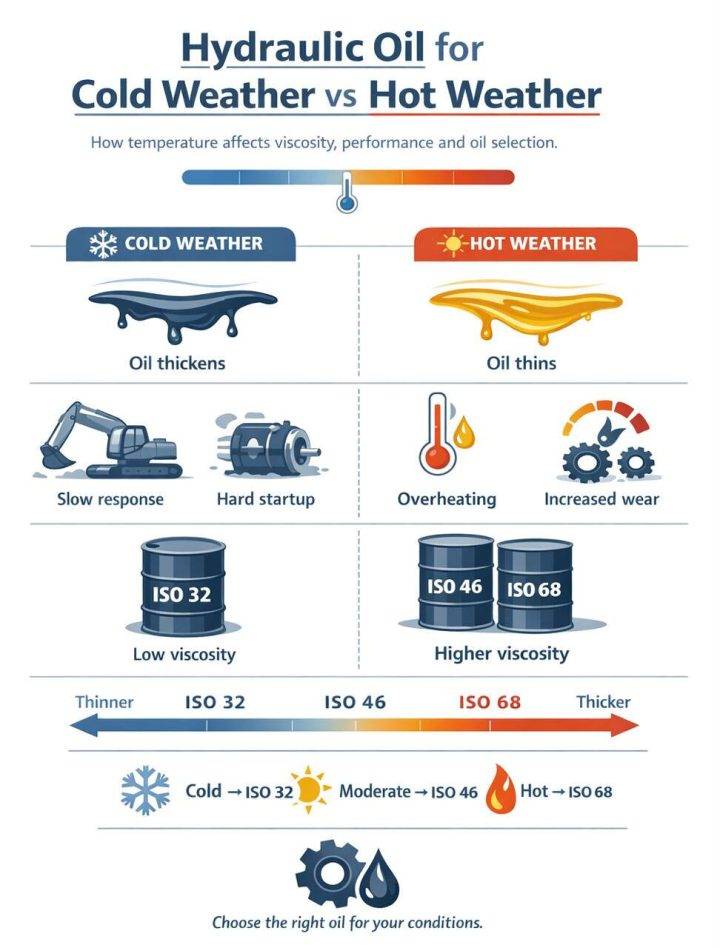
In high temperatures, hydraulic oil becomes thinner. This reduces its ability to lubricate and protect internal components.
Higher viscosity oils help maintain a protective film under heat and heavy load.
Hydraulic oil grades are based on viscosity. The higher the number, the thicker the oil at operating temperature.
If you are unsure which grade is correct, see our guide on choosing between ISO 46 and ISO 32 hydraulic oil.
Using the wrong hydraulic oil for the temperature can create symptoms similar to worn-out or contaminated oil.
If you are seeing these issues, also read our guide on signs hydraulic oil needs changing.

Excavators and plant machinery often work in changing environments, from cold starts in winter to high operating temperatures under load.
Choosing the correct hydraulic oil helps:
For more information, see:
Use our Oil Advisor tool to quickly find the correct oil based on your machine and conditions.
Lower viscosity oils such as ISO 32 are typically better for cold weather as they flow more easily at low temperatures.
Higher viscosity oils like ISO 46 or ISO 68 are better suited for hot conditions as they maintain protection under heat.
In moderate climates, ISO 46 may work year-round, but extreme temperatures may require seasonal adjustments.
Use the Hydraulic Oil Advisor tool or check manufacturer recommendations based on temperature and machine type.