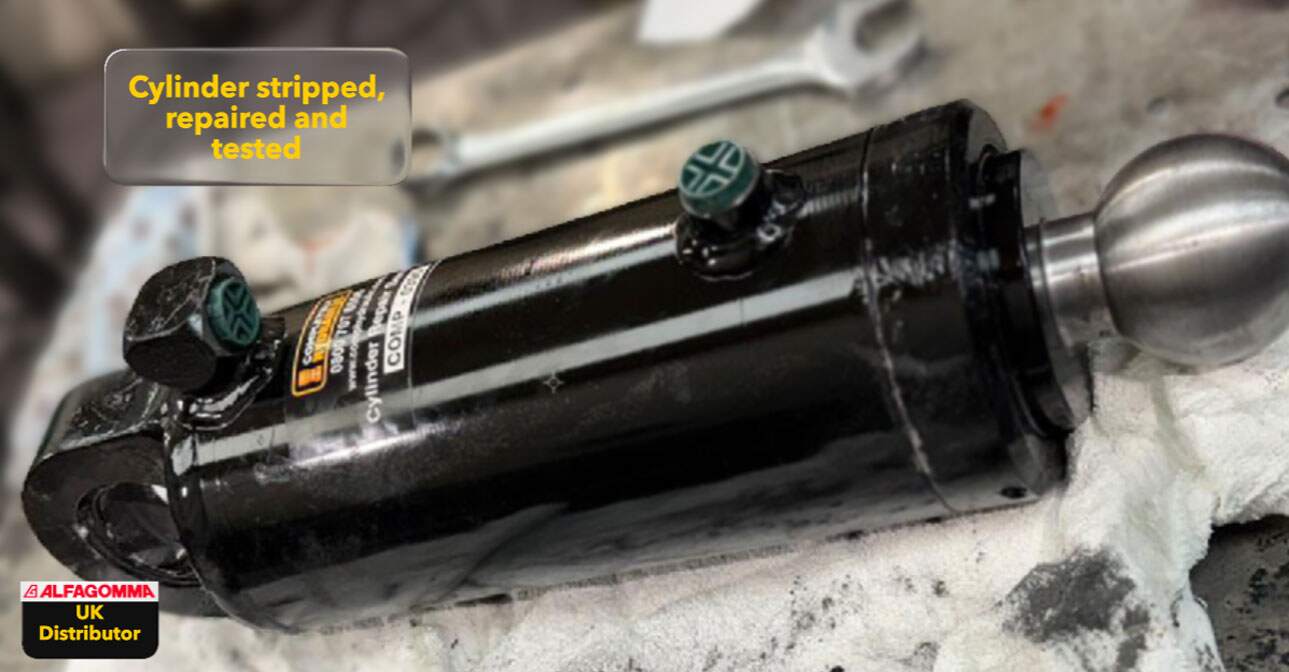
A full breakdown of diagnosing, stripping, rebuilding and testing a hydraulic cylinder with a new rod and seal kit.
Hydraulic cylinders are exposed to extreme pressure, contamination and wear. Over time, this leads to damaged rods, worn seals and loss of performance.
In this case study, we show the full process of a hydraulic cylinder strip and rebuild, including installing a new rod, replacing seals and pressure testing the unit before returning it to service.
If your cylinder is leaking or under-performing, early repair can prevent complete failure and costly downtime.
Some machines require specialist or OEM-specific hydraulic oil. Using the wrong oil can cause serious damage.
Check Your Oil NowTell us what’s failed — we’ll get back to you quickly.
Get a Fast Quote →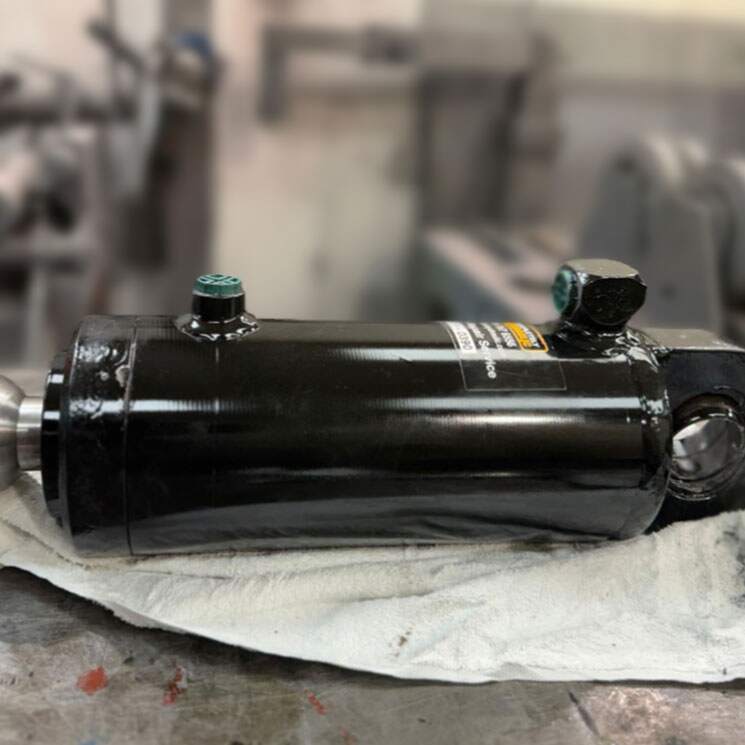
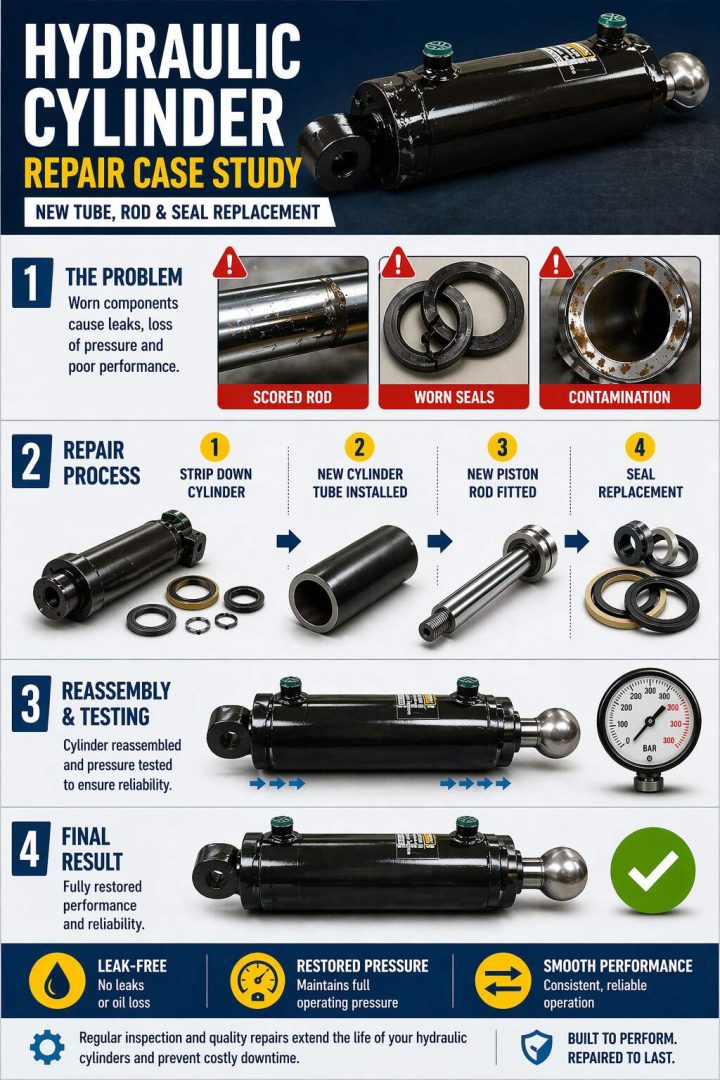
The cylinder was fully stripped down to assess internal wear and identify the root cause of failure.
During inspection, we identified:
These issues reduce efficiency and can lead to leakage, pressure loss and eventual system failure.

A new precision-machined piston rod was installed along with a full seal kit.
Key work carried out:
Replacing both the rod and seals ensures long-term reliability rather than temporary fixes.
After reassembly, the cylinder was tested to confirm performance and reliability.
Only after passing all tests was the cylinder approved for return to service.
Ignoring early signs of cylinder wear can result in:
A full rebuild with quality components restores performance and extends equipment lifespan.
If your cylinder is leaking, damaged or under-performing, we can help with fast diagnostics and repair.
Seal wear, rod damage, contamination and high operating stress are the most common causes.
Yes, most cylinders can be rebuilt with new rods, seals and internal components.
Typically 1–3 days depending on damage and parts availability.
In many cases, repair is more cost-effective and restores full performance.