
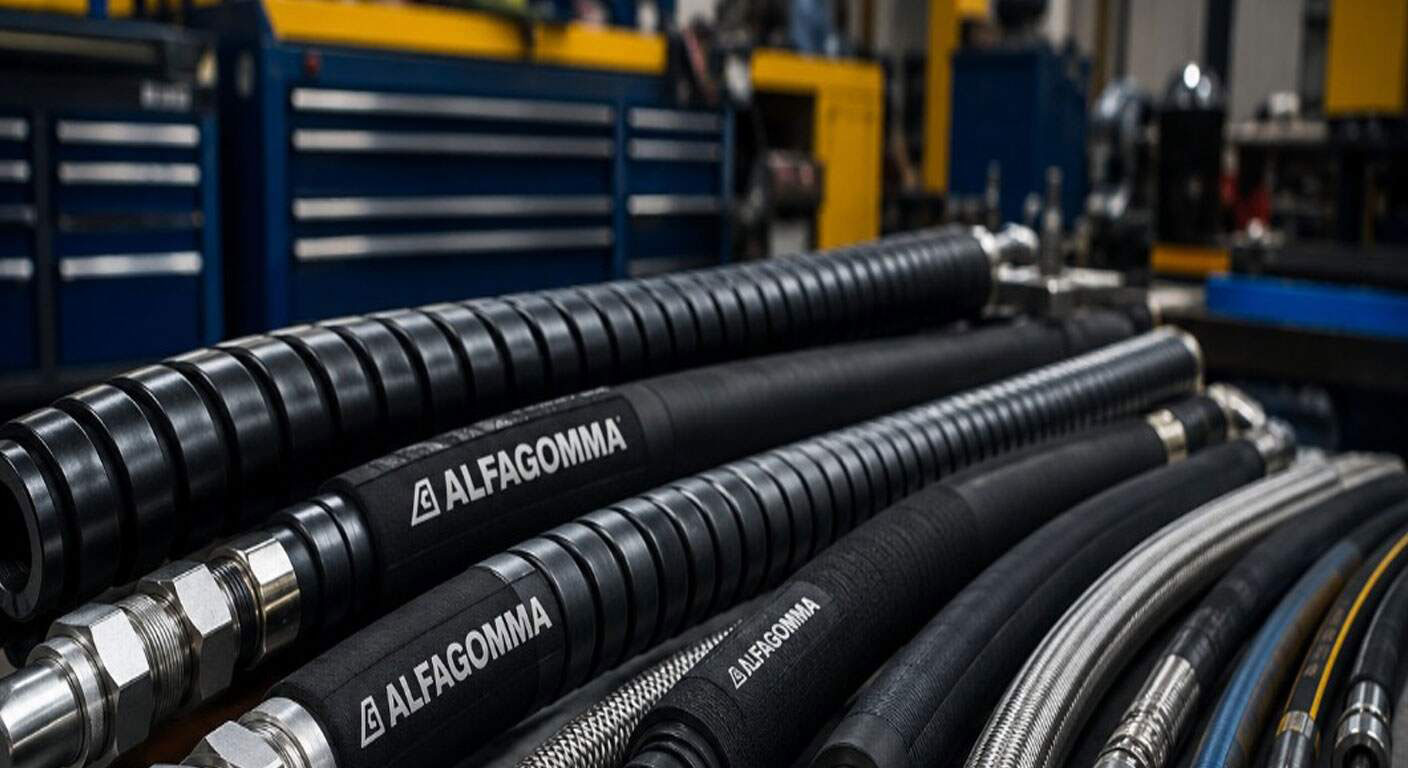
Hydraulic Hoses Explained – Types, Uses & Selection Guide
Hydraulic hoses are a critical part of modern machinery. They transfer hydraulic fluid under pressure between pumps, valves, cylinders and other hydraulic components, helping machines lift, move, steer and operate safely.
From construction equipment and agricultural machinery to factory systems and transport fleets, hydraulic hoses are used across countless industries every day.
This guide explains the main hydraulic hose types, common applications, SAE hose ratings and how to choose the correct hose for your machinery or hydraulic system.
Quick Answer:
Hydraulic hoses are reinforced flexible hoses designed to carry hydraulic fluid under pressure. Different hose types are used depending on pressure, temperature, flexibility and machine application.
What Are Hydraulic Hoses?
Hydraulic hoses are specially designed flexible hoses built to handle high-pressure hydraulic fluid systems.
Most hydraulic hoses include:
- An inner tube
- A reinforcement layer
- An outer protective cover
The reinforcement layer gives the hose strength and pressure capability, while the outer layer protects against abrasion, heat, weather and external damage.

What Do Hydraulic Hoses Do?
Hydraulic hoses transfer hydraulic fluid between components inside a hydraulic system.
Without hydraulic hoses, machinery would not be able to:
- Lift heavy loads
- Operate hydraulic cylinders
- Steer correctly
- Control attachments
- Power hydraulic tools
- Maintain pressure safely
A damaged or failed hydraulic hose can stop machinery immediately and lead to costly downtime.
Did You Know?
Many hydraulic hose failures are caused by poor routing, abrasion, heat or incorrect hose selection rather than the hose itself.
Industries That Use Hydraulic Hoses
Construction
Excavators, dumpers, cranes and plant machinery.
Agriculture
Tractors, harvesters, loaders and farming equipment.
Manufacturing
Production lines, presses and hydraulic systems.
Transport & Logistics
Fleet vehicles, tail lifts and transport equipment.
Rail & Utilities
Maintenance systems and specialist machinery.
Get Priority Hydraulic Support & Trade Pricing
Jump the queue. Reduce downtime. Pay less for parts, labour and callouts.
✔ Priority response
✔ Lower rates day & night
✔ Trade discounts on parts
✔ 30-day credit terms (approved accounts)
Main Types Of Hydraulic Hose
1. Braided Hydraulic Hose
Braided hydraulic hose is one of the most common hose types used across industrial and mobile hydraulic systems.
These hoses usually contain one or two layers of braided steel wire reinforcement.
- Good flexibility
- Suitable for medium to high pressure
- Common on general machinery
- Widely used in construction and industrial equipment
2. Multi-Spiral Hydraulic Hose
Multi-spiral hose uses multiple layers of spiral wire reinforcement and is designed for very high-pressure hydraulic systems.
- Excellent pressure handling
- Ideal for heavy-duty applications
- Used on excavators and heavy plant
- Suitable for high pulse environments
3. Low-Pressure Hydraulic Hose
Low-pressure hydraulic hose is more flexible and commonly used for return lines, lubrication systems and lighter-duty applications.
- Flexible construction
- Lower pressure capability
- Common for return and suction lines
4. Thermoplastic Hydraulic Hose
Thermoplastic hose is lightweight, highly abrasion resistant and suitable for specific hydraulic applications requiring flexibility and smaller outside diameters.
- Excellent abrasion resistance
- Suitable for lift equipment
- Works well in low temperatures
5. Stainless Steel Braided Hose
Stainless steel braided hoses are used in aggressive or high-temperature environments.
- Suitable for chemicals and aggressive fluids
- Excellent temperature resistance
- Common in specialist industrial systems

Understanding SAE Hydraulic Hose Ratings
SAE (Society of Automotive Engineers) hose ratings help classify hydraulic hoses based on their construction and pressure capability.
Common SAE hose types include:
SAE 100R1
Single wire braid hose for medium-pressure systems.
SAE 100R2
Double wire braid hose for higher-pressure applications.
SAE 100R9 / R12
Spiral reinforced hose for heavy-duty hydraulic systems.
SAE 100R7 / R8
Thermoplastic hose for specialist hydraulic applications.
SAE 100R14
PTFE-lined hose for high-temperature environments.
Choosing the wrong SAE hose type can reduce performance and increase the risk of hose failure.
How To Choose The Correct Hydraulic Hose
Several factors affect hydraulic hose selection.
- Pressure requirements
- Operating temperature
- Fluid compatibility
- Flexibility requirements
- Abrasion and environmental exposure
- Hose routing and bend radius
- Correct fittings and couplings
Choosing the correct hydraulic hose helps improve safety, reliability and machine performance.
Professional Hose Selection Matters
Using the wrong hose type, pressure rating or fitting can lead to leaks, downtime and premature hydraulic hose failure.
Common Hydraulic Hose Problems
- Abrasion and rubbing
- Heat damage
- Poor routing
- Tight bend radius
- Incorrect pressure rating
- Oil contamination
- Improper crimping or fittings
You can learn more about these issues in our related hose guides below.
Need Hydraulic Hose Support?
Our mobile engineers support on-site hydraulic hose repair and replacement.
Need Hose Inspection?
We can inspect hose routing, wear and hydraulic system condition.