Updated: 11 September 2026
A hydraulic system does not always need complete replacement when operating requirements change or performance begins to fall short.
In many cases, an existing system can be assessed, modified or upgraded to improve reliability, control, cooling, filtration, component compatibility or its ability to carry out a new duty.
Completely Hydraulic supports hydraulic system modifications for industrial machinery, mobile equipment, construction plant, material-handling systems and specialist applications.
A hydraulic system upgrade should start by identifying what needs to improve — for example cycle time, temperature control, filtration, reliability, an additional machine function or replacement of obsolete components. Pumps, valves, cylinders, hoses and controls should then be assessed as one system before modifications are made.
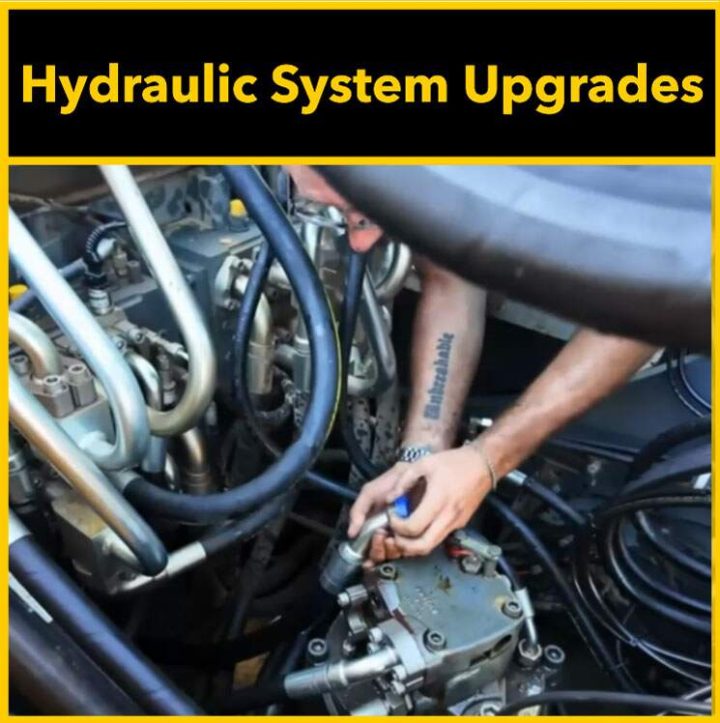
An upgrade may be worth considering when a hydraulic system still has useful service life but no longer meets the machine’s current requirements.
Possible signs include:
If the system used to perform correctly and has recently developed a fault, diagnosis may be more appropriate than redesign. If the machine’s duty or performance requirement has genuinely changed, an engineered modification may be justified.
A good hydraulic modification starts by defining exactly what the machine needs to do differently.
That may involve:
The required improvement should be quantified where possible before components are selected.
Increasing a relief-valve setting or fitting components with higher pressure ratings is not automatically a system upgrade.
Every part of the circuit has limits, including:
A relief valve is primarily a pressure-limiting safety device. Increasing its setting without confirming the ratings and design of the complete system can overload hydraulic and mechanical components.
The pump determines the hydraulic flow available to the circuit, but replacing it with a larger unit is not automatically the correct way to make a machine faster.
A proposed pump change should consider:
Increasing flow without checking the rest of the system can increase pressure loss, heat generation and component stress.
Valve modifications may be useful when a machine needs improved control or additional hydraulic functions.
Depending on the system, work can involve:
Valve selection must consider system flow, pressure, mounting, duty and control requirements.
A cylinder may need to be changed when machine load, stroke or geometry changes.
Important considerations include:
A larger cylinder can provide more force at the same pressure, but it also requires more oil to achieve the same movement speed.
That means cylinder, pump and valve selection should be considered together.
See Hydraulic Cylinder Manufacturing.
Hoses and pipework may need modification when system flow, routing or machine movement changes.
Upgrade work can involve:
A higher-pressure-rated hose is not automatically an upgrade if the existing failure is caused by poor routing, heat or abrasion.
See Hydraulic Hose Routing Guide.
Persistent overheating can reduce oil viscosity and shorten component life, but fitting a larger cooler should not be the first step without understanding why the system is generating excessive heat.
Possible causes include:
Cooling improvements may be appropriate once the heat load and underlying causes have been established.
Some hydraulic systems benefit from improved contamination control, particularly where sensitive components, harsh environments or repeated contamination problems are involved.
Possible improvements include:
However, fitting the finest possible filter is not automatically better because excessive restriction can create other problems.
See Hydraulic Filter Replacement & Fluid Cleanliness.
A hydraulic power unit can often be modified rather than completely replaced.
Changes may involve:
The power pack should be reviewed as a complete system so that one improvement does not create a new restriction or thermal problem elsewhere.
See Hydraulic Power Pack Repair & Replacement.
Machinery is often modified to operate additional equipment or attachments.
Before adding a new hydraulic function, engineers need to consider whether the existing system can support the additional demand.
This can include checking:
Simply connecting another actuator to an existing circuit without checking these factors can reduce performance or generate excess heat.
Older machines may remain mechanically useful even when original hydraulic components are no longer readily available.
In these situations, an upgrade can involve engineering a modern replacement solution.
Examples include:
The aim is to preserve the required machine function while ensuring the replacement components are compatible with the wider hydraulic system.
Some hydraulic modifications can reduce unnecessary energy loss, although the correct approach depends heavily on the circuit.
Losses can be associated with:
The objective should be to meet the machine’s performance requirement efficiently, rather than simply fitting larger components.
| Situation | Possible Route |
|---|---|
| One subsystem no longer meets demand | Targeted modification may be suitable. |
| Obsolete valve or control system | Modern replacement or redesign may extend machine usefulness. |
| Repeated heat or flow problems | System diagnosis followed by targeted improvements may be appropriate. |
| Widespread component deterioration | Major rebuild or replacement may be more practical. |
| Completely new machine requirement | A new hydraulic system design may be the better route. |
Typical Upgrade Process
1. Define the problem or new requirement
Establish what the machine needs to do differently and what is currently limiting it.
2. Assess the existing hydraulic system
Review relevant pumps, valves, cylinders, hoses, controls, fluid and operating conditions.
3. Determine the engineering changes
Identify which modifications are required and how they affect the rest of the system.
4. Select or manufacture components
Specify suitable components for the intended duty.
5. Install the modifications
Complete the agreed mechanical and hydraulic work.
6. Check operation
Confirm that the modified system operates as intended within the agreed requirements.
If a hydraulic system has become slow, weak or hot without any change in operating requirements, there may be a fault rather than a design limitation.
Possible causes include:
Diagnosing these issues first can prevent unnecessary redesign.
See Hydraulic System Troubleshooting & Diagnostics.
Where modifications become extensive, the project should be treated as a hydraulic system design exercise rather than a collection of individual component changes.
That means considering:
The best location depends on the machinery and scope of work.
| Work Type | Typical Route |
|---|---|
| Machine inspection | Often carried out on site so the system can be assessed in its working environment. |
| Hose or pipework modifications | May be completed on site depending on scope and access. |
| Major component refurbishment | Often better suited to specialist workshop engineering. |
| Custom fabrication or manufacture | Usually requires workshop engineering and machining capability. |
See Hydraulic Repair Workshop.
Modified systems should also be maintainable.
Useful considerations include:
A system that performs well but cannot be maintained efficiently may create new problems later.
CH can support projects involving:
For larger engineered projects, see OEM Hydraulic Solutions and Hydraulic Engineering Projects.
Jump the queue. Reduce downtime. Pay less for parts, labour and callouts.
✔ Priority response
✔ Lower rates day & night
✔ Trade discounts on parts
✔ 30-day credit terms (approved accounts)
Completely Hydraulic operates engineering and trade-counter locations in:
Birmingham and the wider West Midlands are supported through mobile hydraulic engineering.
A successful hydraulic system upgrade is not about fitting the biggest pump, increasing pressure or using stronger components everywhere. It is about defining the machine’s requirement, understanding the existing circuit and engineering compatible improvements across the complete system.
Tell CH what the machine currently does, what needs to improve and any problems you are experiencing. The team can then help determine whether repair, modification or a more substantial system redesign is the appropriate route.
Yes. Many hydraulic systems can be modified where the existing machinery remains suitable and the required performance changes can be engineered safely.
Increasing pressure can increase actuator force in some systems, but pressure should not simply be raised without confirming component ratings, machine loads and system design.
Additional flow can increase actuator speed in some applications, but the prime mover, valves, hoses, pipework, cooling and reservoir must all be able to support the changed flow requirement.
Potentially. The existing pump capacity, valves, pressure, return flow, cooling and controls should first be assessed to determine whether the system can support the additional function.
Yes, where a suitable engineered replacement can be identified or a revised valve or manifold arrangement can be designed.
Sometimes additional cooling is appropriate, but the reason for excessive heat should first be investigated because internal leakage, restrictions, relief losses or other faults may be generating the heat.
A hose should be selected for the actual application. A higher pressure rating does not solve problems caused by poor routing, abrasion, twisting, heat or unsuitable fittings.
The decision depends on the system’s condition, current limitations, required future performance, component availability, repairability and commercial value.
Yes. CH supports hydraulic system design, custom engineering and OEM hydraulic solutions where a new or substantially redesigned system is required.
Some assessment and modification work can be completed on site, while machining, component refurbishment and complex fabrication may require specialist workshop facilities.