
Hydraulic Adapters: Types, Threads, Uses & How to Choose
Learn what hydraulic adapters do, how they connect hoses and components, and what to check before choosing BSP, JIC, ORFS, Metric or other hydraulic connections.
Last Updated: 26 August 2026
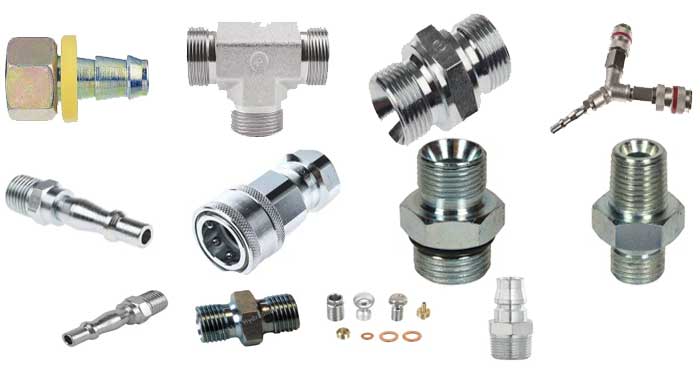
Hydraulic adapters — also commonly called hydraulic adaptors — are connection components used to join different parts of a hydraulic system.
They can connect hoses, tubes, pipes, valves, pumps, cylinders, motors and manifolds where the connection size, thread type, orientation or sealing method needs to change.
A hydraulic adapter may look simple, but choosing the wrong one can lead to leaks, damaged threads, poor sealing, flow restriction or premature failure.
The correct adapter should match the thread form, sealing method, size, material, working pressure and hydraulic application.
For a wider explanation of hose ends and thread systems, see our
hydraulic hose fittings guide.
Not Sure Which Hydraulic Oil You Need?
Some machines require specialist or OEM-specific hydraulic oil. Using the wrong oil can cause serious damage.
Check Your Oil NowQuick Answer: What Is a Hydraulic Adapter?
A hydraulic adapter is a fitting used to connect two hydraulic components where the connection type, size, thread, gender or orientation is different.
For example, an adapter may connect a BSP hose fitting to a metric port, change from male to female, reduce one connection size to another, or change the direction of a hydraulic line.
The adapter must match both sides of the connection correctly. Similar-looking threads and fittings should never be assumed to be interchangeable.
Need a fast hydraulic repair quote?
Tell us what’s failed — we’ll get back to you quickly.
Get a Fast Quote →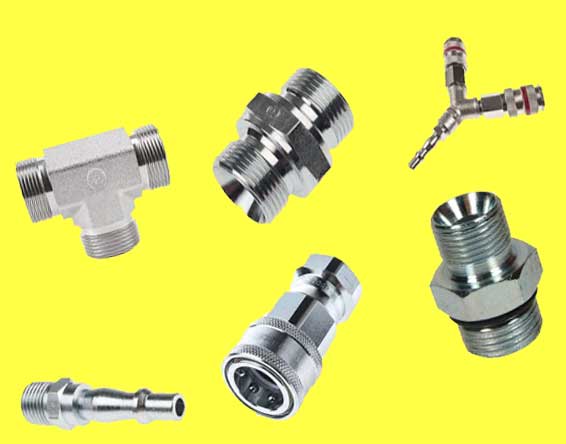
What Do Hydraulic Adapters Do?
Hydraulic systems contain many individual components that must be connected together while remaining serviceable.
Adapters help create those connections without permanently welding or brazing the entire hydraulic circuit together.
They can be used to connect:
- Hydraulic hoses to valves
- Hoses to rigid pipework
- Pumps to hydraulic lines
- Cylinders to hoses
- Motors to hydraulic circuits
- Manifolds to hoses or tubes
- Two different fitting standards together
- Different connection sizes
Engineering Point
Hydraulic adapters make systems easier to assemble, remove and service, but every connection still needs to be correctly specified. The adapter becomes part of the pressure-containing hydraulic circuit.
What Is the Difference Between a Hydraulic Adapter and a Hydraulic Fitting?
The terms are sometimes used interchangeably, but there is a useful practical distinction.
A hydraulic fitting is a general term for a component used to create a hydraulic connection.
A hydraulic adapter is usually a fitting that connects two existing connection types together or changes some aspect of the connection.
| Component | Typical Purpose |
|---|---|
| Hydraulic Fitting | General connection component used on hoses, pipes, tubes or ports |
| Hydraulic Adapter | Joins, converts, reduces, redirects or changes between hydraulic connection types |
What Types of Hydraulic Adapter Are Available?
Hydraulic adapters are produced in many configurations because hydraulic systems use different thread standards, sizes and routing arrangements.
Common types include:
- Straight adapters – connect components inline
- Elbow adapters – change connection direction
- Tee adapters – create an additional hydraulic branch
- Reducing adapters – connect different sizes
- Male-to-male adapters – join two female connections
- Female-to-female adapters – join two male connections
- Swivel adapters – assist alignment and installation
- Bulkhead adapters – allow a hydraulic line to pass through a panel or structure
- Conversion adapters – connect different thread or fitting standards
Which Hydraulic Thread Types Are Common?
Several thread and sealing systems are commonly encountered on hydraulic equipment used in the UK.
| Connection | Key Feature | Important Point |
|---|---|---|
| BSPP | British Standard Pipe Parallel | Parallel thread; sealing arrangement depends on the fitting design |
| BSPT | British Standard Pipe Taper | Tapered thread connection |
| JIC | 37° flare connection | Seals on the flare seating surfaces rather than the thread itself |
| ORFS | O-Ring Face Seal | Uses an O-ring at the face of the fitting |
| Metric | Metric thread systems | Multiple metric sealing designs exist, so thread size alone is not enough |
| NPT/NPTF | Tapered pipe thread | Common on some imported and North American equipment |
Do Not Identify a Hydraulic Thread by Diameter Alone
Different hydraulic thread systems can have similar outside diameters. Thread pitch, taper, seat angle and sealing method also need to be identified correctly.
Why Are O-Rings Used in Some Hydraulic Adapters?
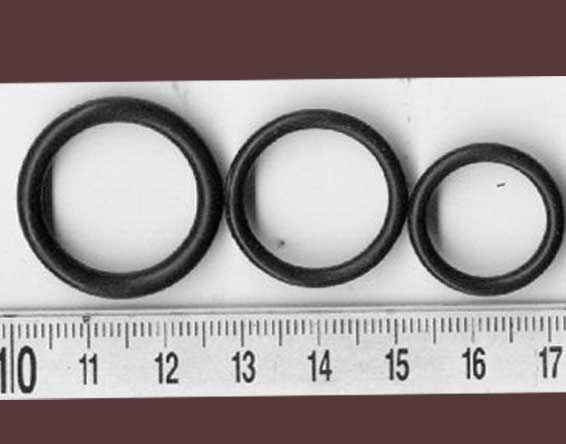
Many modern hydraulic connection systems use an elastomeric seal rather than relying entirely on the thread to create the seal.
Examples include:
- O-Ring Face Seal connections
- O-ring boss-style port connections
- Some BSPP port connections with sealing washers or bonded seals
- Some metric port connections
The O-ring or seal provides the hydraulic sealing function while the threaded connection provides mechanical retention.
For more detail, see our hydraulic O-ring seals guide.
How Do You Choose the Correct Hydraulic Adapter?
01 — IDENTIFY BOTH CONNECTIONS
Determine the thread, size, sealing method and gender on both sides.
02 — CHECK THE PRESSURE
Confirm the adapter is suitable for the system working pressure.
03 — CHECK THE MATERIAL
Select a material compatible with the hydraulic fluid, environment and application.
04 — CHECK THE ROUTING
Choose straight, elbow, swivel or other geometry according to the installation.
05 — CHECK THE SEAL
Confirm the correct O-ring, bonded seal, cone, flare or other sealing arrangement is present.
Why Does Hydraulic Adapter Pressure Rating Matter?
A hydraulic adapter is part of the pressure-containing system.
Its working-pressure capability can vary according to:
- Adapter design
- Thread type
- Connection size
- Material
- Manufacturer specification
You should not assume every adapter with the same thread can withstand the same pressure.
The Lowest Rated Component Matters
The safe working pressure of a hydraulic connection can be limited by the lowest-rated component in the assembly, including the hose, fitting, adapter or coupling.
What Materials Are Hydraulic Adapters Made From?
Hydraulic adapters are available in different materials depending on the pressure, fluid and environment.
Common materials include:
- Steel – widely used for general hydraulic applications
- Stainless steel – used where improved corrosion resistance or specific environmental compatibility is required
- Brass – used in selected lower-pressure or specialised fluid applications where suitable
Material choice should be based on the manufacturer’s pressure rating and compatibility information rather than appearance alone.
See our guide to stainless steel in hydraulic systems.
Why Does Adapter Shape Matter?
The physical shape of the adapter can affect hose routing and component access.
A straight adapter may work where two connections align directly.
An elbow can redirect the hydraulic line where space is restricted.
A swivel can make installation easier by allowing alignment before the connection is fully tightened.
Correct adapter choice can help reduce:
- Hose twisting
- Unnecessary bending
- Stress at hose fittings
- Interference with neighbouring components
- Poor maintenance access
For more detail, see our hydraulic hose routing guide.

What Are Common Hydraulic Adapter Mistakes?
Several connection problems can be caused by incorrect adapter selection or installation.
Common mistakes include:
- Using the wrong thread type
- Forcing unlike threads together
- Using the wrong sealing method
- Reusing damaged seals
- Selecting an adapter with insufficient pressure rating
- Over-tightening a connection
- Under-tightening a connection
- Using an unnecessary number of adapters
- Creating poor hose alignment
- Using unsuitable material for the environment
Never Force a Hydraulic Connection
If two fittings do not connect correctly by hand during initial engagement, stop and recheck the thread. Forcing mismatched threads together can permanently damage both components and create an unsafe hydraulic joint.
Why Do Hydraulic Adapters Leak?
A leak around an adapter can have several possible causes.
These can include:
- Damaged O-rings or sealing washers
- Incorrect thread pairing
- Damaged flare or cone surfaces
- Corrosion
- Incorrect tightening
- Misalignment
- Vibration or unsupported hose weight
- Cracked or damaged fittings
A leaking connection should be correctly identified before simply tightening it further.
Hydraulic Safety Warning
Never use your hand to search for a pressurised hydraulic leak. High-pressure hydraulic fluid can penetrate the skin and cause serious injury.
How Do You Buy the Correct Hydraulic Adapter?
The safest approach is to identify the connection before ordering rather than selecting an adapter only from a photograph.
Useful information can include:
- Thread outside diameter
- Thread pitch
- Male or female connection
- Parallel or tapered thread
- Seat or sealing-face type
- Required adapter angle
- Hydraulic working pressure
- Machine or component information
Bring the Old Adapter If Possible
Where a damaged adapter can be safely removed, bringing the original component to a hydraulic trade counter can make identification easier. Photos, thread measurements and machine details can also help where the original part is unavailable.
Hydraulic Adapters, Fittings & Hose Support
Completely Hydraulic supports customers requiring hydraulic hose assemblies, fittings, adapters and related hydraulic components.
Our hydraulic support includes:
- Hydraulic adapter identification
- Hydraulic hose fittings
- Hose assembly manufacture
- BSP, JIC, ORFS and Metric connections
- Hydraulic hose replacement
- Hydraulic trade counters
- Mobile hydraulic engineering
Visit our hydraulic trade counters or view our hydraulic hose repair and replacement service.
Keeping Machinery Moving.
Quick Engineering Summary
PURPOSE
Hydraulic adapters connect or convert different hydraulic connections.
MATCH BOTH ENDS
Thread, size, sealing method and gender must be identified correctly.
PRESSURE MATTERS
The adapter must be rated for the hydraulic application.
MATERIAL MATTERS
Steel, stainless steel and brass may be used depending on the application.
DO NOT FORCE THREADS
Similar-looking connections are not necessarily compatible.
Related Hydraulic Fitting & Hose Guides
Need Help Identifying a Hydraulic Adapter?
If you have an unknown hydraulic fitting or adapter, bring the component to one of our trade counters or send us clear photographs and equipment details.
Hydraulic Adapter FAQs
What is a hydraulic adapter?
A hydraulic adapter is a connection component used to join two hydraulic fittings, hoses or ports where the thread, size, gender, sealing method or orientation needs to change.
What is the difference between a hydraulic adapter and a fitting?
Hydraulic fitting is a broad term covering hydraulic connection components. An adapter is typically a fitting used to join or convert between two existing connection types.
What are the most common hydraulic adapter threads?
Common systems include BSPP, BSPT, JIC, ORFS, Metric and NPT/NPTF. The systems use different threads and sealing arrangements, so they should be correctly identified before connection.
Can BSP and JIC fittings be connected?
Yes, but only by using a correctly specified conversion adapter designed for the relevant BSP and JIC connections. They should not be connected directly as though they were the same fitting type.
Can BSPP and BSPT threads be connected?
BSPP and BSPT are different thread forms. Whether a particular connection is suitable depends on the specific fitting design and sealing arrangement, so they should not be assumed to be directly interchangeable.
Why do some hydraulic adapters use O-rings?
O-rings provide a dedicated sealing surface in connection systems such as ORFS and some hydraulic port fittings. The thread provides mechanical retention while the O-ring forms the hydraulic seal.
What material should a hydraulic adapter be made from?
Steel is common for general hydraulic use, while stainless steel may be selected for greater corrosion resistance and brass for certain suitable applications. Material choice should follow pressure and fluid compatibility requirements.
Why is my hydraulic adapter leaking?
Possible causes include damaged seals, incorrect threads, damaged seating surfaces, corrosion, incorrect tightening or poor alignment. The connection should be identified and inspected before further tightening.
Can Completely Hydraulic identify hydraulic adapters?
Yes. Completely Hydraulic can help identify hydraulic adapters, hose fittings and related hydraulic connections through its trade counters and hydraulic engineering network.